
Every productivity coach will tell you to take a break. What they will not tell you is that most “breaks” for founders are a waste of time, and a workation done right is one of the few that actually pays off.
TL;DR: A workation in the Dolomites, specifically at Hotel Zirm in Olang at the foot of Kronplatz, lets entrepreneurs keep working while recovering physically, eating well, moving daily, and reconnecting with a partner or co-founder. The Dolomiti Superski area offers 1,246 km of slopes across 12 resorts for the skier in your team. The spa, outdoor pool, and Italian food do the rest. If you are a founder running on fumes, the mountain environment alone measurably drops cortisol. Skip this and you are not being hardcore; you are just accelerating your own decline.
The Counterintuitive Truth About Founder Rest
Most entrepreneurs I know, myself included, do not take vacations. The idea of sitting on a beach doing nothing while the startup keeps moving is genuinely painful. According to a 2024 survey of 156 founders, 53% experienced burnout within the past year, and 62% of those reported a desire to give up their business. Not slow down. Give up. That is the actual cost of skipping recovery.
The workation model fixes this. You bring your laptop, you keep your Gmail notifications, and you work your regular hours. But you work them somewhere that rebuilds you at the same time. The Dolomites, specifically the area around Kronplatz in South Tyrol, happens to be one of the best places on earth to do exactly that.
I have been doing this with my husband every early spring for several years now. We drive from the Netherlands, we pick up the threads of our companies somewhere around Innsbruck, and by the time the Dolomite peaks come into view the stress chemistry in my body starts to shift. That is not a metaphor. Research published by MIT Sloan Management Review confirms that environmental change combined with physical activity is one of the most effective structural interventions against chronic work stress, and far more durable than mindfulness apps.
Why the Dolomites Specifically
The Dolomites are a UNESCO World Heritage Site. They are also, from a workation logistics perspective, exceptionally practical for a European entrepreneur.
The drive from the Netherlands takes roughly 9 to 10 hours with multiple stops to recharge Tesla and have a high protein snack. There are no long-haul flights, no jet lag, no days lost to travel recovery. You arrive in South Tyrol, and because the altitude at Olang sits around 1,000 metres and the hotel another 400 metres up at Geiselsberg, the air quality alone is noticeably different.
The Kronplatz ski area (also called Plan de Corones) is one of the flagship resorts inside the Dolomiti Superski network, the largest ski area in the world with 1,246 km of slopes, 450 lifts, and 12 interconnected resorts. My husband, who knows this mountain better than most ski instructors, will tell you that the 119 km of piste at Kronplatz alone, including the legendary Black Five challenge, gives you enough terrain to vary your skiing for a full week without repetition. The Dolomiti Superski pass covers everything from Cortina d’Ampezzo to Alta Badia under one ticket, which is one of the best deals in European skiing.
For the non-skier in the team, that is where Hotel Zirm becomes a serious competitive advantage.
Hotel Zirm: Built for the Entrepreneur Who Needs Both
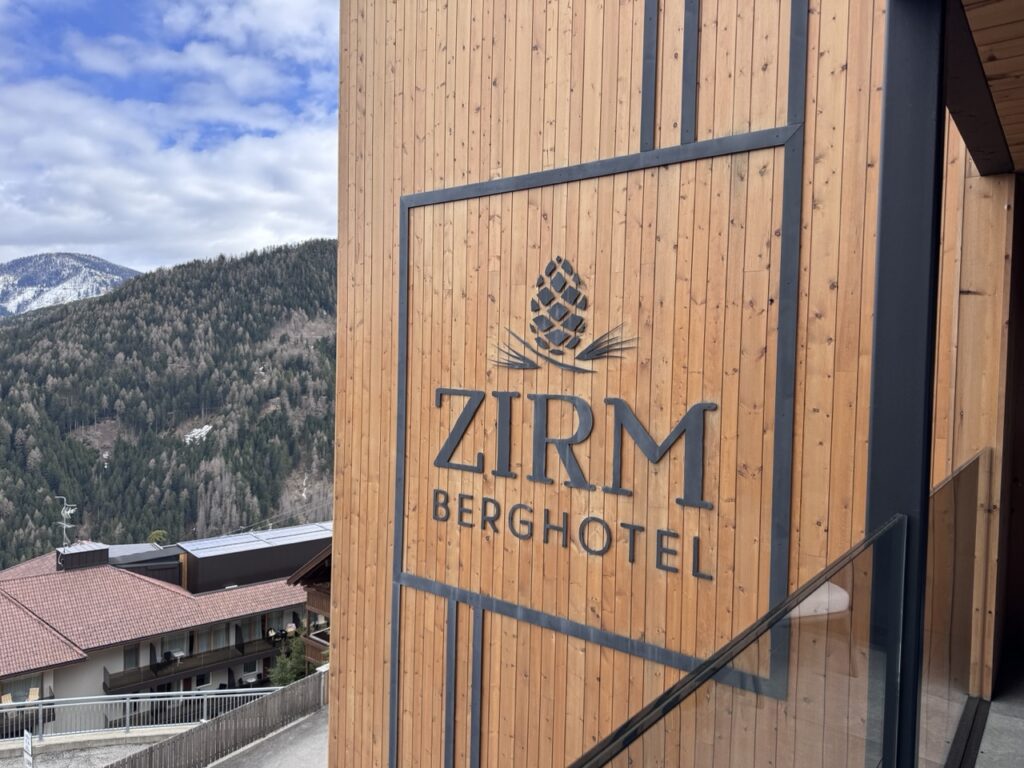
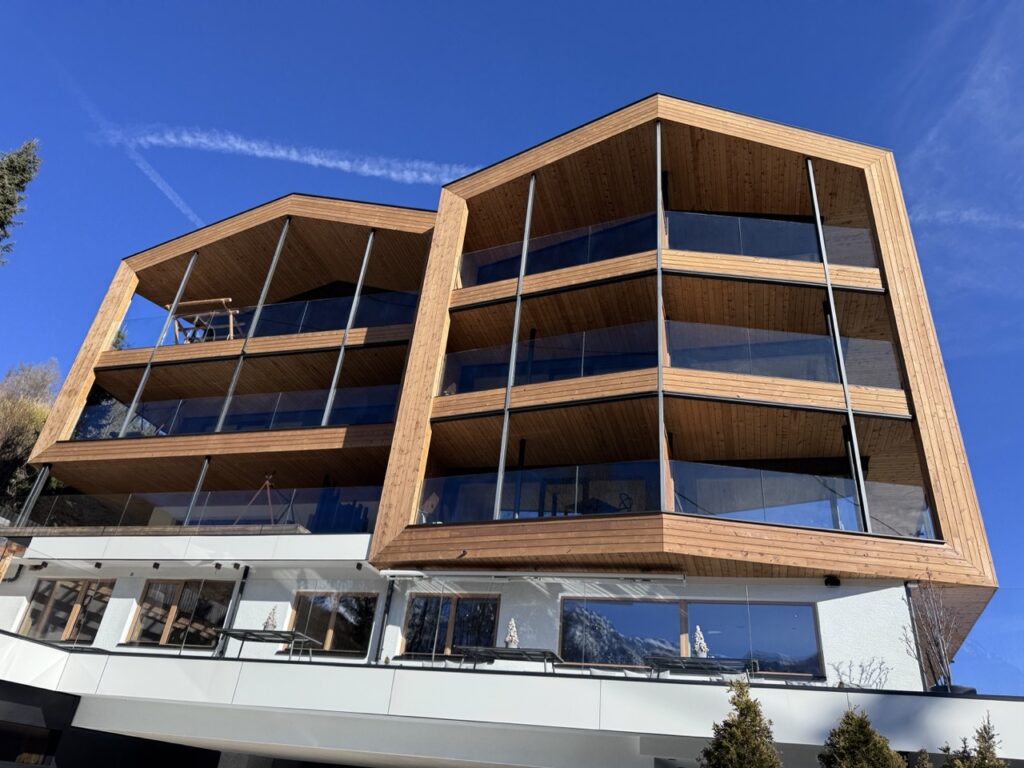
Berghotel Zirm sits at 1,400 metres on a quiet plateau in Geiselsberg above Olang, at the end of a mountain road where there is no through traffic. That detail matters more than it sounds. When you are a founder, every environmental cue that signals “this is not the office” reduces the cognitive load you carry all day. No street noise, no urban urgency, no reason to be anywhere else.
The hotel is a 4-star property with ski-in, ski-out access directly onto Kronplatz. Here is the setup that works for us:
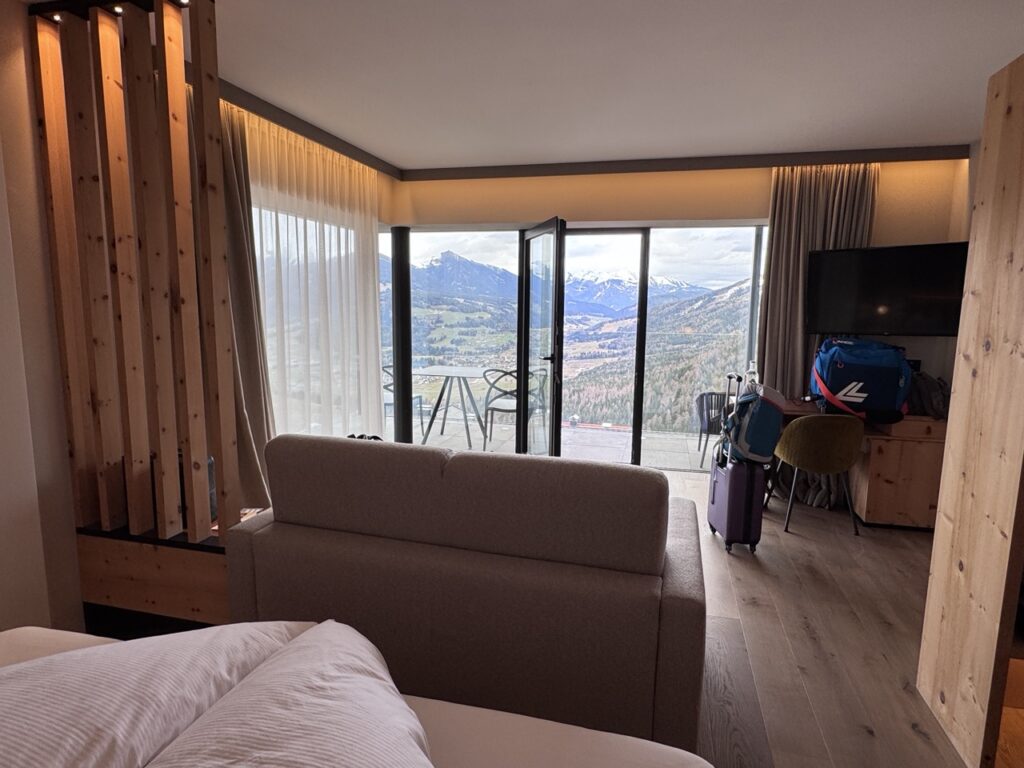
My husband straps on his skis from the hotel terrace and is on the piste in under two minutes. I am in the outdoor heated pool at 32°C, looking up at the gondola passing overhead, sometimes spotting him through the cable car window. He once messaged me from the gondola with a photo of me swimming far below. That image has become a kind of symbol for how we run our lives: we are each doing exactly what we need to be doing, in the same place, at the same time, and we can see each other. That is the definition of a functional entrepreneur relationship.
What the Spa Does for Your Brain
The wellness area at Zirm is not decorative. For a founder dealing with the cognitive erosion that comes from sustained high-stress output, the practical protocol looks like this:
- Outdoor panorama pool, heated year-round to 32°C, with a massage bench and natural salt water preparation
- Indoor pool at 30°C with counter-current system for active swimming
- Jacuzzi
- Multiple saunas including a salt steam bath
- A “dark silent room” for complete sensory rest
- Private rest boxes after activity
- 80 sq metre gym with Technogym equipment
- Massages using organic products (on request)
Sauna use in combination with cold exposure is one of the evidence-supported recovery protocols that sports medicine research consistently recommends for reducing systemic inflammation and improving sleep quality. Sleep quality is the first thing founders sacrifice and the first thing that degrades decision-making. The sauna-cold-rest cycle at Zirm addresses this directly.
On top of that, the wellness area stays open until 9:30 PM on several days per week. That means you can finish your afternoon work block, do a proper sauna session, eat a good dinner, and still get eight hours. When did you last do that?
The Nutrition Argument: Italian Food as Founder Fuel
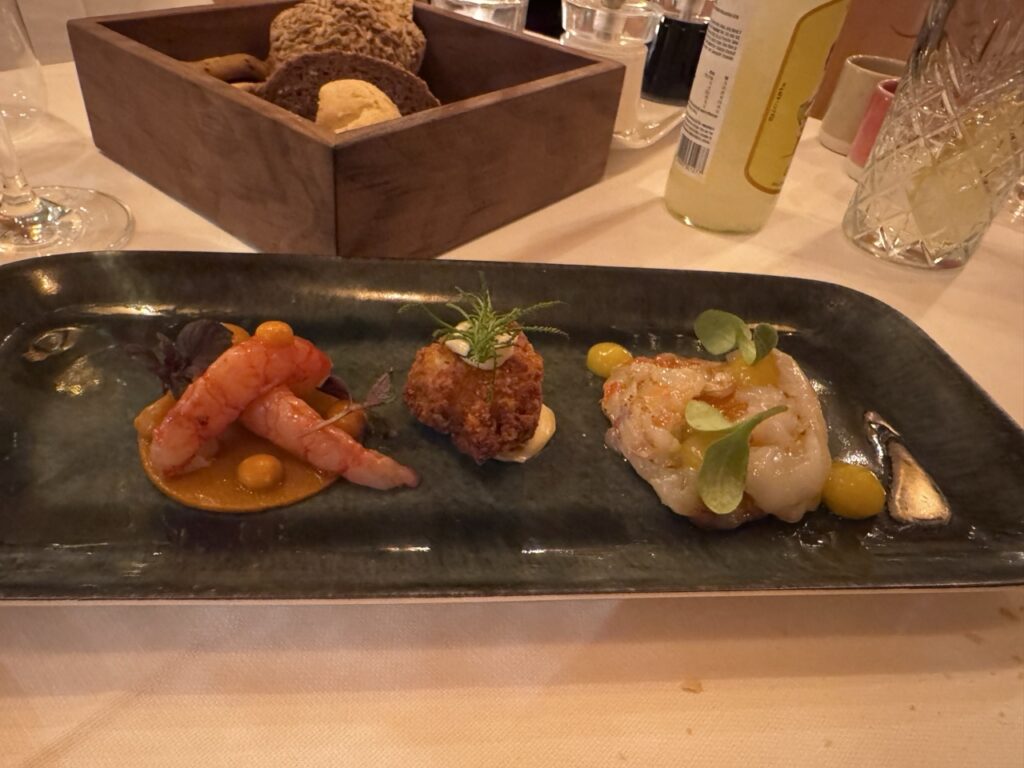
I am a high-protein eater. Anyone who follows my writing at Mean CEO knows that I treat nutrition as a business continuity issue, not a lifestyle preference. Female entrepreneurs who train physically need at minimum 1.6g of protein per kilogram of body weight daily to protect muscle, cognitive output, and decision-making speed under pressure.
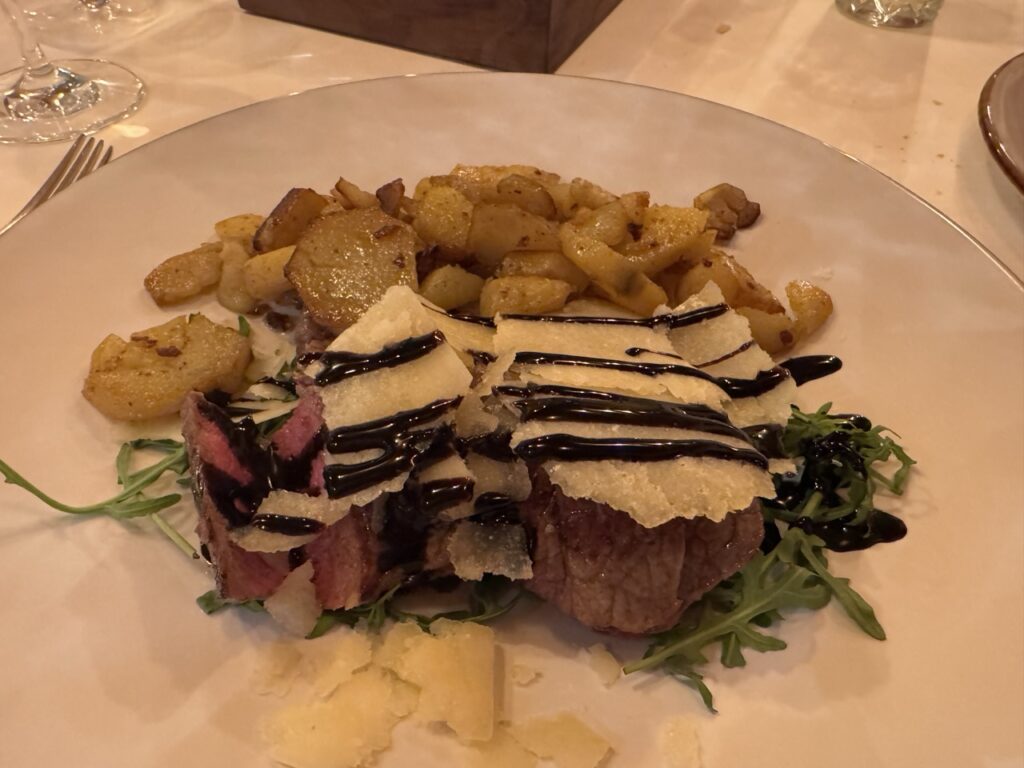
South Tyrol sits at the crossroads of Italian and Austrian culinary tradition, and the result is one of the most protein-dense, satisfying regional cuisines in Europe. The CIRMOLO panorama restaurant at Zirm serves à la carte dinner with a range that covers everything from a tagliata (thin-sliced grilled beef, which is my default high-protein order) to local South Tyrolean specialties. The breakfast buffet runs from 7:30 AM to 11:00 AM. That is not a typo. An 11 AM breakfast cutoff means you can do a full morning deep work session, eat a proper meal, and then decide what the rest of the day looks like.
The hotel also offers fully equipped kitchenettes in studios and suites, which is a detail that experienced workationers will appreciate. If you have a specific protein protocol or dietary pattern, you are not dependent on restaurant timing. You cook what you need when you need it.
And yes, there is an Aperol situation. The panorama bar at Zirm handles aperitivo the way it should be handled: outdoors, with a Dolomite backdrop, at the exact moment the light goes golden. This is mental health maintenance by any sensible measure.
The Practical Workation Setup
A workation is not a vacation with a laptop. It requires intentional structure. Here is the framework I use at Zirm:
Time blocking at altitude
| Time Block | Activity |
|---|---|
| 7:30 – 9:00 AM | Deep work at breakfast (writing, strategy) |
| 9:00 – 11:00 AM | Outdoor walk or pool |
| 11:00 AM – 1:00 PM | Emails, creative work |
| 1:00 – 3:00 PM | Lunch + partner activity (skiing, hiking, spa) |
| 3:00 – 5:00 PM | Second work block (creative, light tasks) |
| 5:00 – 7:00 PM | Spa, sauna, pool |
| 7:30 PM onwards | Dinner, aperitivo, no screens |
This schedule consistently produces more output in five hours than I would get in a standard nine-hour office day in the Netherlands. The research on this is not ambiguous. The World Health Organization classifies burnout as an occupational phenomenon resulting from chronic unmanaged workplace stress. The cure is not working less. It is working in conditions that allow genuine recovery between sessions.
What Entrepreneurs Get Wrong About Workations
Mistake 1: Booking a city hotel. Cities are stimulating, not restorative. The visual and auditory complexity of a city keeps your nervous system in a mild alert state all day. Mountains do the opposite. Pick altitude.
Mistake 2: Staying somewhere with no physical activity built in. If the wellness offering is a small gym and a hotel pool with no view, you will not use it. The outdoor pool at Zirm faces the Dolomites. That view alone changes your willingness to get in.
Mistake 3: Going alone. A workation with a partner, even one with a completely different activity profile, creates natural accountability and rhythm. My husband skis, I swim and spa. We meet for lunch and dinner. Neither of us is waiting for the other, and neither of us is working nonstop. That dynamic works.
Mistake 4: Skipping the food. The nutrition situation in your workation location is not a secondary concern. Italian food in South Tyrol, specifically the combination of quality proteins, fresh produce, local cured meats, and good olive oil, is one of the best dietary environments a founder can be in. Studies on Mediterranean-adjacent diets consistently show cognitive and inflammatory benefits that directly affect the quality of strategic thinking.
Mistake 5: Treating it as an annual event. One workation a year is better than zero. But the founders I know who use this model most effectively do it quarterly or at minimum twice yearly. Early spring in the Dolomites. Summer in a different altitude location. The rhythm matters more than the perfect destination.
Insider Tips for the Zirm Workation
Here are things you will not find on the hotel website:
Book the studio or suite with a kitchenette. The extra flexibility on meal timing is worth the upgrade. Founders often have irregular eating schedules, and not being tied to restaurant hours is a productivity protection.
Use the outdoor pool before lunch. Most guests are away. You get the pool, the mountain view, and the silence entirely to yourself. This is a 30-minute reset that costs nothing and produces outsized mental returns.
Ask the front desk about the packed lunch option. If your partner is skiing and you want to join for a summit lunch, you can arrange this. The Kronplatz summit restaurants have views that make most corporate strategy retreats look embarrassing.
The Berghotel Zirm has a best price guarantee on direct booking. Do not book through a third-party platform. The hotel’s own system gives you the best rate plus the early bird bonus if you book in advance.
Ski-in/ski-out means you do not need a car for transport. One fewer logistics decision per day adds up over a week.
The Dolomiti Superski app shows real-time lift wait times. Download it before arrival. My husband uses it to plan his morning routes and avoid the short queues that appear mid-morning on busy days.
Time your arrival for early spring. February and March in the Dolomites offer reliable snow, fewer school holiday crowds than January, and the kind of clear light that makes the mountains look like someone turned the contrast up. The drive from the Netherlands is also easier without December or January weather on the Alpine passes.
The Burnout Numbers Founders Need to Read
- 53% of founders experienced burnout in the past year, per a 2024 survey cited by Entrepreneur magazine
- 62% of those who burned out reported a desire to give up their business entirely
- Burnout costs businesses $322 billion annually in lost productivity, according to 2025 workplace research
- 39% of entrepreneurs say they feel guilty when taking time off, which makes the burnout worse
- 44% of entrepreneurs cite lack of downtime as a significant burnout contributor, per ZipDo research
These are not wellness statistics. They are performance statistics. A founder who burns out loses the company. A founder who takes a structured workation two to three times a year stays in the game.
Previous Workation Research From The Author
I have covered the workation topic across several articles that go deeper on specific aspects:
- My broader research on hotel workations in Italy covers the category systematically, with criteria for evaluating any Italian hotel as a workation base.
- The top 3 hotels in Italy to work from piece compares Zirm against two other strong options for entrepreneurs who want alternatives.
- My deep analysis of Excelsior Dolomites Life Resort as a workation base covers another strong South Tyrol option for founders who prefer a larger 5-star property.
The pattern across all of them: the Dolomites consistently outperform coastal and city destinations for founder workationers because the combination of altitude, physical activity, cuisine, and visual environment produces measurable recovery rather than just a change of scenery.
FAQ
What exactly is a workation in the Dolomites?
A workation in the Dolomites means staying at a mountain hotel in the Dolomite region of northern Italy, typically in South Tyrol, while continuing to work remotely during defined hours. The model works because the Dolomites offer a combination of physical activity options (skiing, hiking, via ferrata), outstanding wellness facilities, exceptional Italian and South Tyrolean food, and clean high-altitude air that together produce active recovery during the hours when you are not working. Unlike a vacation, you maintain your professional output. Unlike a standard remote work setup, the environment actively rebuilds the physical and cognitive reserves that desk work depletes.
Is Hotel Zirm a good base for a workation near Kronplatz?
Hotel Zirm in Geiselsberg above Olang is one of the best workation bases in the entire Dolomiti Superski area for entrepreneur couples or small teams. It offers direct ski-in/ski-out access to Kronplatz, a heated outdoor panorama pool at 32°C open year-round, three saunas, a Jacuzzi, an 80 sq metre gym, the CIRMOLO panorama restaurant for evening dining, studios and suites with kitchenettes for flexible meal timing, and a location at the end of a quiet mountain road with no traffic. The combination of Swiss stone pine rooms, Dolomite views from every window, and the wellness facilities means both active and recovery needs are covered in one property.
How do you structure a productive workation schedule in the mountains?
The most effective workation schedule treats the mountain environment as infrastructure, not scenery. Work your highest-cognitive tasks in the morning before breakfast or in the mid-morning block when your brain is freshest. Use the 1 to 3 PM slot for physical activity, which serves as the transition between your two work blocks and prevents the energy crash that typically hits remote workers in the early afternoon. Reserve the second work block for reactive work: emails, calls, lighter tasks. End the work day at a fixed time and use the spa or outdoor pool before dinner. This structure consistently produces five to six hours of high-quality output while rebuilding physical and mental reserves simultaneously.
What is the Dolomiti Superski area and why does it matter for a workation?
The Dolomiti Superski area is the largest ski area in the world, covering 12 interconnected ski resorts, 450 lifts, and 1,246 km of slopes in the Dolomites of northeastern Italy. For a workation, the size of the area matters because it means your skiing partner will never exhaust the terrain in a single week, which removes any pressure to compromise the work schedule to “fit in” more skiing. Kronplatz alone offers 119 km of piste with 31 lifts including 23 gondolas, the Black Five challenge for advanced skiers, and easy bus connections to Alta Badia and the famous Sellaronda circuit. One pass covers the entire network.
Can you do a workation in the Dolomites if you do not ski?
The Dolomites in winter are not only a skiing destination. Hotel Zirm’s wellness area, the panorama outdoor pool, the hiking trails accessible even in winter, the spa treatments, and the cultural attractions at the Kronplatz summit (including the Messner Mountain Museum Corones designed by Zaha Hadid and the LUMEN Museum of mountain photography) give a non-skier a full daily programme. Winter hiking and snowshoeing are available with guided options. The spa experience alone, particularly the outdoor pool with mountain views and the multi-sauna setup, is worth a standalone trip for someone who needs recovery-focused time away.
How does a mountain workation help prevent entrepreneur burnout?
Burnout in founders results from chronic unmanaged stress combined with insufficient physical recovery and sleep deprivation. A mountain workation addresses all three simultaneously. The altitude and mountain environment shift your nervous system from sustained sympathetic activation (fight/flight) toward parasympathetic recovery. Physical activity in the form of skiing, swimming, or hiking releases cortisol appropriately and then allows it to drop, rather than keeping it elevated at a desk. Sauna use combined with cold exposure reduces systemic inflammation. High-quality sleep at altitude in a cool, dark, quiet room restores the cognitive function that stress degrades. The result is not just rest; it is a structural reset that lets you return to work with genuine capacity rather than just a slightly emptier inbox.
What should entrepreneurs eat during a workation in the Dolomites?
South Tyrolean and northern Italian cuisine is, for founders who train and work at high cognitive intensity, close to optimal. The region is protein-rich: tagliata (grilled beef, typically 200-300g), local cured meats like Speck Alto Adige, eggs, cheese, and fresh fish are staples. The breakfast buffets at hotels like Zirm run until 11 AM and include everything needed for a high-protein morning meal. Avoid the trap of treating mountain food as purely indulgent. Use the evening restaurant for your main protein and fat intake, keep lunch light if your afternoon includes physical activity, and treat the aperitivo as the mental decompression ritual it is, not a guilt trigger. The Italian approach to food timing, with dinner as the social and nutritional centrepiece, naturally aligns with a productive founder schedule.
How much does a workation at Hotel Zirm cost?
Hotel Zirm operates a best-price guarantee on direct bookings through their website, with early bird discounts available for advance reservations. Room types range from studios to the full Zirm Suite, with options including private loggias and kitchenettes. For ski access, the Dolomiti Superski pass runs from approximately €73 to €86 per adult per day for the 2025/26 season when purchased online in advance, covering all 12 resorts and 450 lifts. The most cost-effective approach is to book the hotel directly at berghotel-zirm.com, purchase ski passes online before arrival, and plan the trip for early spring (February or March) when crowds are lower than the Christmas and January peak periods.
What are the best rooms to book at Hotel Zirm for a workation?
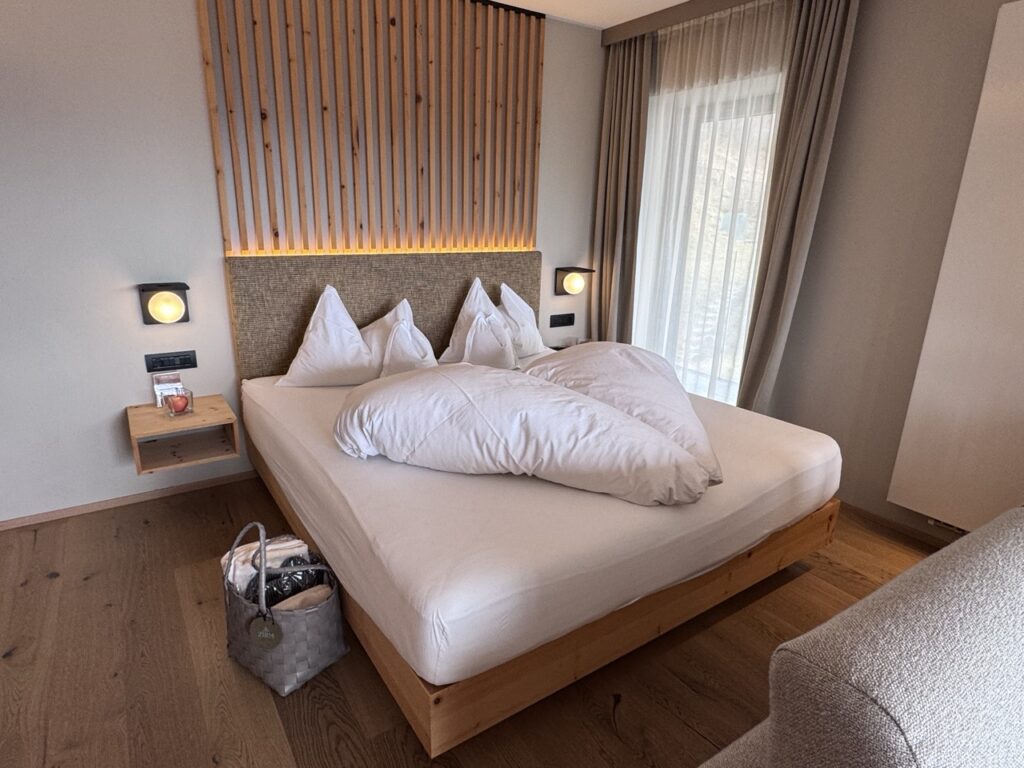
For a workation, the studio or suite categories with kitchenettes are the strongest choice. Kitchenettes let you manage your own meal timing and protein intake independently of restaurant schedules, which matters when your work day does not align with standard meal times. The rooms with private loggias facing south offer Dolomite panorama views that replace the morning commute stare with something considerably better for your mental state. The Swiss stone pine interior used throughout the hotel, including furniture and wall cladding, is not only aesthetic. Stone pine wood has a documented effect on lowering resting heart rate, according to Austrian research by the Joanneum Research Institute, making it a measurable contribution to sleep quality.
How does a workation in the Dolomites compare to a digital nomad setup in a city?
The digital nomad model in cities optimises for connectivity, coworking access, and social variety. It performs poorly on recovery, sleep quality, physical activity, and nutrition control. A mountain workation in the Dolomites inverts those trade-offs: you trade social variety for deep focus, urban stimulation for environmental recovery, coworking neighbours for a partner who brings independent energy, and mediocre coworking coffee for an 11 AM breakfast with a 180-degree Dolomite view. For founders at a high-output phase of their startup, or those who feel the early symptoms of burnout, the mountain workation outperforms the digital nomad model on nearly every metric that actually predicts sustainable performance. The city option is fine for two weeks at 28. It is a liability at 35 when you are running two companies and need your brain to work at full capacity every day.
