


TL;DR: How Google’s Simplified Search Results Affect Businesses in 2026
Google's 2026 search updates prioritize speed, user satisfaction, and clarity by removing underused and outdated structured data features. This impacts SEO strategies, emphasizing high-quality content, user experience, and precise structured data compliance.
• Structured data types like book actions and salary estimates are phased out.
• Fewer rich snippets and higher competition demand that businesses focus on valuable, user-centered content.
• Fast-loading, mobile-friendly designs will drive rankings, penalizing shallow or duplicate pages.
Actionable Step: Review Google's updated guidelines and adapt your digital strategy now to stay competitive and thrive in the streamlined search ecosystem. Don't wait, or risk losing visibility.
Check out other fresh news that you might like:
Startup News: Reddit Marketing Guide with Top Steps and Tips for Success in 2026
Startup News: Key Lessons and Expansion Tips from Omnidocs’ Acquisition of Officeatwork in 2026
Startup News 2026: Top Lessons and Tips from WP Engine’s Legal Battle with Automattic
Startup News: How to Assess Your Net Worth and Avoid Financial Mistakes in 2026
Understanding Google’s Efforts to Simplify Search Results in 2026
Anyone who relies on Google, whether as a user or a business owner, has experienced how its search results evolve. As we move into 2026, this evolution is taken to a new level with Google’s latest initiative to simplify its search results page. While much of this change happens seamlessly for users, entrepreneurs and startups must act fast to adapt to the shifting landscape. Countless opportunities exist in this cleaner, faster ecosystem, but only for those truly prepared. This is your wake-up call.
Why Is Google Making These Changes?
The goal is crystal clear: speed and user satisfaction. Google identified several features, especially those tied to structured data, that were underused or outdated. As of January 2026, these features will no longer appear in search results or in tools like Google Search Console. This streamlining means less information overload, faster loading times, and a sharper focus on the content that truly matters.
- Lower user engagement with specific structured data features.
- Outdated functionality no longer fits modern search behavior.
- Prioritization of efficiency and clarity in queries.
What Should Entrepreneurs Know About Structured Data?
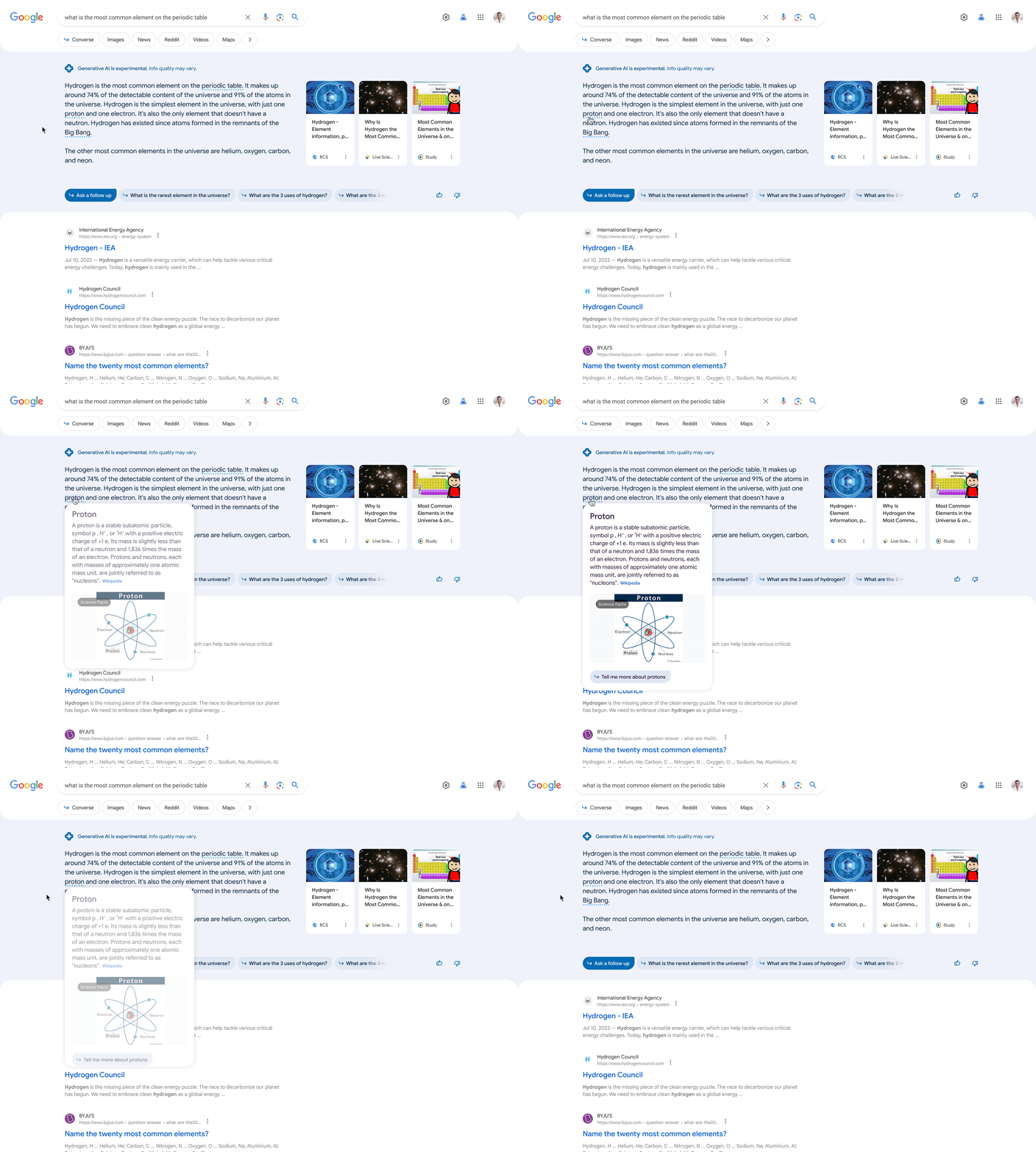
Entrepreneurs often underestimate the value of structured data in their SEO efforts. It’s the unsung hero behind rich snippets, search appearance filters, and specific ranking enhancements. By removing certain features, Google is signaling a major shift: the search engine will reward fundamental practices over elaborate gimmicks. Here’s how structured data changes in 2026:
- Some structured data types, including book actions, course information, and salary estimates, are phased out.
- Search Console will no longer support deprecated structured data types or offer visibility metrics for them.
- Features like rich result tests will be streamlined, reducing backend noise.
Site operators should review updated guidelines in Google’s documentation updates. Keeping your structured data precise and relevant will ensure seamless alignment with the new system.
How Will Cleaner Results Impact Your Business?
This streamlining project is more than a tidying spree. For entrepreneurs, Google’s repositioning will demand smarter strategies and laser focus. Here is how streamlined search results could affect businesses:
- Fewer rich snippets: Content optimized for complex schemas may no longer stand out.
- Higher competition: Brands with useful, high-quality information are more likely to win the page-one battle.
- User experience matters: Clear navigation, mobile responsiveness, and quick load times will dominate rankings.
- Content quality over quantity: Duplicate or shallow pages are increasingly penalized.
“Generic strategies will no longer cut it. If you’re not thinking deeply about what your audience needs, someone else will, and they’ll rank higher.”
How to Adapt and Stay Competitive
If you’re not already reviewing your digital strategy, today is the day. Change in Google’s algorithm isn’t just an inconvenience, it’s a chance to build momentum while your competitors are scrambling. Follow these steps to thrive in this leaner search reality:
- Audit your website: Remove outdated features and focus on clean code.
- Create cornerstone content: Focus on evergreen articles that solve real problems for your audience.
- Optimize user experience: Mobile-first design, accessible navigation, and fast load speeds remain pivotal.
- Invest in technical SEO: Ensure compliance with structured data updates and schema guidelines via Google Search Central Blog.
- Build authority: Brand strength and trust signals elevate visibility in streamlined rankings.
Common Pitfalls to Avoid
Sadly, many businesses falter during transitional periods like this one. Avoid falling victim to the following mistakes:
- Over-optimizing for features that Google is actively removing.
- Skimping on content quality or doing bare-minimum design updates.
- Ignoring structured data compliance, which now matters more for what remains.
- Failing to align your content production with user intent, rather than search engine tricks.
These missteps cost both time and critical rankings. Businesses unable to adapt risk losing valuable traffic and revenue streams.
The Million-Dollar Question: Are You Ready?
When Google rolls out changes like these, strong businesses find ways to benefit while weaker ones flounder. Ask yourself: is your SEO resilient enough to meet the demand for streamlined results? Are you adapting fast enough to preserve your visibility? If you’re confident in your strategy, these changes will pay dividends.
Act now. You don’t want to regret hesitating once your competitors embrace speed, precision, and user-first strategies.
Violetta Bonenkamp, entrepreneur and change advocate, explores the evolution of Google Search with an unapologetic view into what businesses must do now. It’s not optional, it’s survival.
FAQ on Google’s Efforts to Simplify Search Results in 2026
1. Why is Google simplifying its search results?
Google is simplifying its search results to enhance speed, reduce information overload, and improve user satisfaction by focusing on relevant, high-quality content. Read more about the simplification process.
2. What features are being removed as part of this update?
Google plans to phase out certain structured data types, including book actions, course information, estimated salaries, and other lesser-used features to declutter and optimize the search results. Explore Google's blog on feature updates.
3. How will these changes affect users?
Most users are unlikely to notice significant changes since the features being removed were infrequently used. However, the updates will create a cleaner, faster, and more user-friendly search environment. Learn more about the impact on users.
4. How will businesses and entrepreneurs adapt to these changes?
Businesses must adapt by improving content quality, refining structured data, and focusing on user intent. Google encourages stakeholders to review its updated guidelines in the documentation changelog. Check the structured data updates for site owners.
5. When will these updates take effect?
Support for certain structured data types will be removed as of January 2026, and Search Console features tied to these data types will also be phased out. See details on the upcoming timeline.
6. What should businesses know about structured data updates?
Google is signaling a shift toward rewarding fundamental SEO practices over elaborate features. Businesses should ensure their structured data complies with updated schema guidelines. Discover structured data changes for 2026.
7. How will the changes impact competition on search rankings?
With fewer rich snippets and deprecated features, competition will increase. Brands that prioritize high-quality content, mobile responsiveness, and user-centric strategies are more likely to succeed. Find insights on streamlined search rankings.
8. How can site owners prepare their websites for the 2026 update?
Site owners should perform website audits, remove outdated features, improve page load speed, optimize mobile user experience, and create cornerstone content. Follow the 30-day SEO plan for guidance.
9. What happens to Search Console after January 2026?
Search Console will no longer support or display visibility metrics for deprecated structured data types. Businesses relying on these features must adapt their tracking and reporting processes accordingly. Check the timeline from Google Search Console updates.
10. Where can I find additional resources to stay informed?
Additional updates and structured data guidelines can be found on Google’s official documentation platforms and changelogs. Visit the Google Search documentation updates.
About the Author
Violetta Bonenkamp, also known as MeanCEO, is an experienced startup founder with an impressive educational background including an MBA and four other higher education degrees. She has over 20 years of work experience across multiple countries, including 5 years as a solopreneur and serial entrepreneur. Throughout her startup experience she has applied for multiple startup grants at the EU level, in the Netherlands and Malta, and her startups received quite a few of those. She’s been living, studying and working in many countries around the globe and her extensive multicultural experience has influenced her immensely.
Violetta is a true multiple specialist who has built expertise in Linguistics, Education, Business Management, Blockchain, Entrepreneurship, Intellectual Property, Game Design, AI, SEO, Digital Marketing, cyber security and zero code automations. Her extensive educational journey includes a Master of Arts in Linguistics and Education, an Advanced Master in Linguistics from Belgium (2006-2007), an MBA from Blekinge Institute of Technology in Sweden (2006-2008), and an Erasmus Mundus joint program European Master of Higher Education from universities in Norway, Finland, and Portugal (2009).
She is the founder of Fe/male Switch, a startup game that encourages women to enter STEM fields, and also leads CADChain, and multiple other projects like the Directory of 1,000 Startup Cities with a proprietary MeanCEO Index that ranks cities for female entrepreneurs. Violetta created the “gamepreneurship” methodology, which forms the scientific basis of her startup game. She also builds a lot of SEO tools for startups. Her achievements include being named one of the top 100 women in Europe by EU Startups in 2022 and being nominated for Impact Person of the year at the Dutch Blockchain Week. She is an author with Sifted and a speaker at different Universities. Recently she published a book on Startup Idea Validation the right way: from zero to first customers and beyond, launched a Directory of 1,500+ websites for startups to list themselves in order to gain traction and build backlinks and is building MELA AI to help local restaurants in Malta get more visibility online.
For the past several years Violetta has been living between the Netherlands and Malta, while also regularly traveling to different destinations around the globe, usually due to her entrepreneurial activities. This has led her to start writing about different locations and amenities from the point of view of an entrepreneur. Here’s her recent article about the best hotels in Italy to work from.

