


TL;DR: Master Semantic Search for SEO and AI Visibility in 2026
Semantic search now dominates SEO and search engines, prioritizing intent, context, and relationships over keywords. To thrive, focus on creating content tailored to answer user intent explicitly while using structured data and interconnected articles. Mistakes like ignoring context or dismissing smaller platforms can derail efforts.
• Build topic authority with pillar content and interlinked posts.
• Use natural language and structured formats like Q&As to secure high-visibility placements.
• Extend beyond Google SEO to platforms like TikTok and YouTube, leveraging advanced semantic AI tools.
To refine strategies, explore actionable tips in the Ultimate Guide to Semantic SEO for Startups and turn search changes into growth opportunities.
Check out other fresh news that you might like:
Perplexity AI Interview Explains How AI Search Works via @sejournal, @martinibuster

Semantic Search Is the Only Search That Matters Now (For SEO and AI Visibility)
By Violetta Bonenkamp, serial entrepreneur and founder of AI-powered ventures, including Fe/male Switch.
Search, as we knew it, is dead. In 2026, semantic search forms the backbone of SEO and AI visibility, leaving keyword-stuffed content and outdated optimization strategies in the dust. The traditional methods once used to “game” search engines no longer work in a world where meaning, intent, and context reign supreme. But for founders, marketers, and content creators, this shift offers more opportunity than threat, if you’re adapting fast enough. Let’s break down why semantic search is reshaping everything and how to not just survive but thrive in this new reality.
What Is Semantic Search and Why Does It Matter in 2026?
Semantic search goes beyond matching keywords to query results, it focuses on understanding context, user intent, and entity relationships. Imagine asking, “What’s the best laptop for video editing?” Without semantic search, search engines might throw generic “laptop” results at you. But today’s AI-powered engines analyze the intent behind your words: you need a laptop with powerful specs, reliability, and perhaps budget considerations, likely for professionals.
This shift, driven by advances like Google’s Multitask Unified Model (MUM) and Microsoft’s AI initiatives with OpenAI, changes everything. Algorithms no longer rely solely on keywords but build a map of entities, understanding the nuances connecting them. Brands, products, and even you, as a business owner, are now entities in a massive knowledge graph. For entrepreneurs and marketers, this means creating content isn’t enough anymore; it needs to answer intent explicitly and contextually.
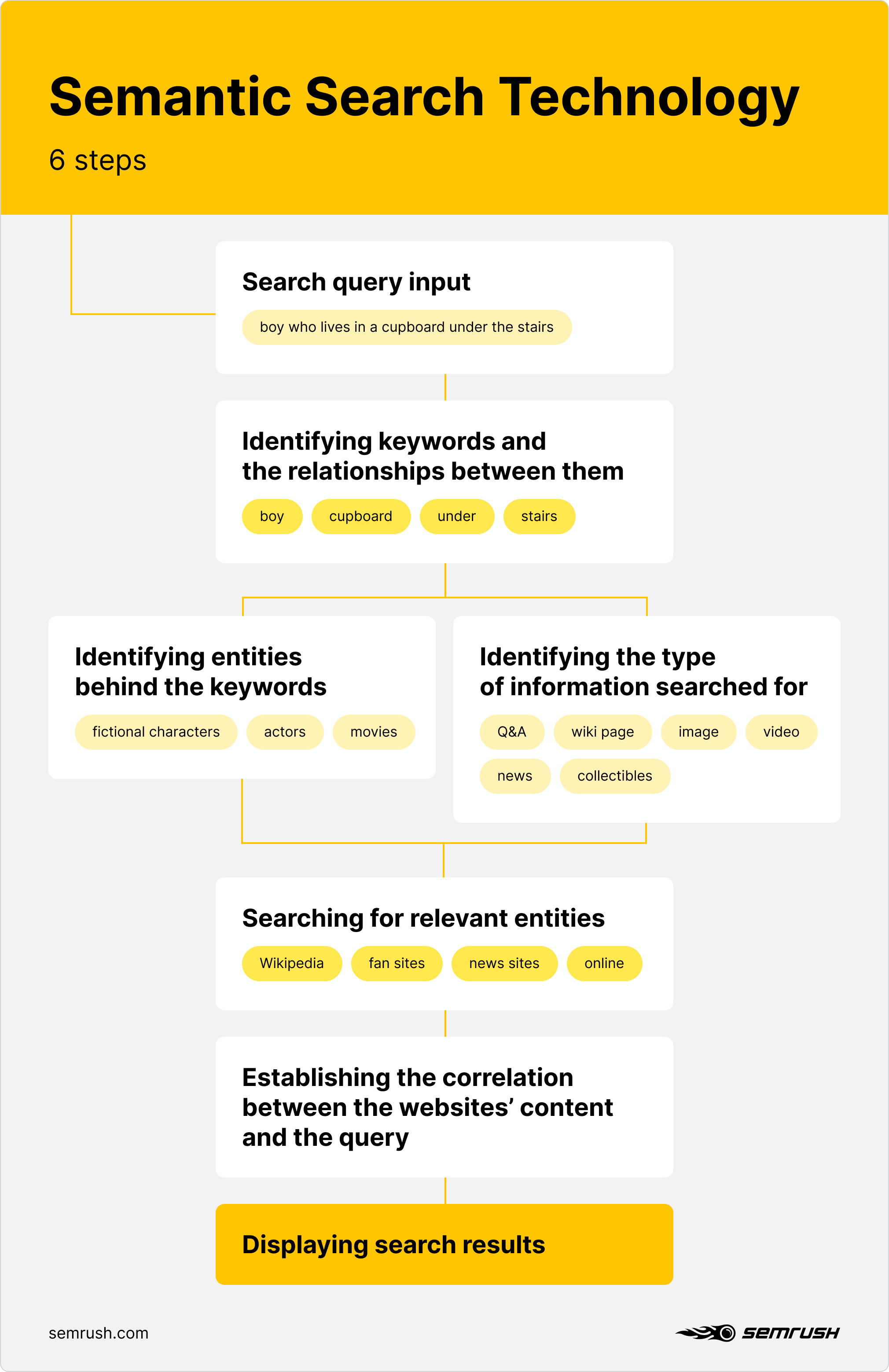
Semantic search doesn’t just live in Google. It appears in AI search tools, voice assistants, and even platforms like YouTube, Instagram, and TikTok. As a founder running multiple AI-driven startups, here’s my truth: if your business or brand isn’t semantically accessible across these platforms, you simply don’t exist.
How Does Semantic Search Work Behind the Scenes?
At its core, semantic search leverages machine learning, natural language processing (NLP), and entity recognition models. Here’s a simplified breakdown of the process:
- Entity recognition: Search engines identify key entities (e.g., names of people, products, locations) within your content and map their relationships.
- Vector embeddings: Instead of matching keywords, semantic algorithms analyze the “proximity” of meanings using vector mathematics. Words like affordable and inexpensive now align naturally.
- Context interpretation: Search engines factor in the user’s location, device, previous searches, and even the time of day to infer intent. For example, “cheap sushi near me” produces different results at 5 PM versus midnight.
- Knowledge graphs: Platforms use knowledge graphs, like Google’s Knowledge Graph, to connect nouns with factual relationships. For example: Leonardo da Vinci → painter → Mona Lisa.
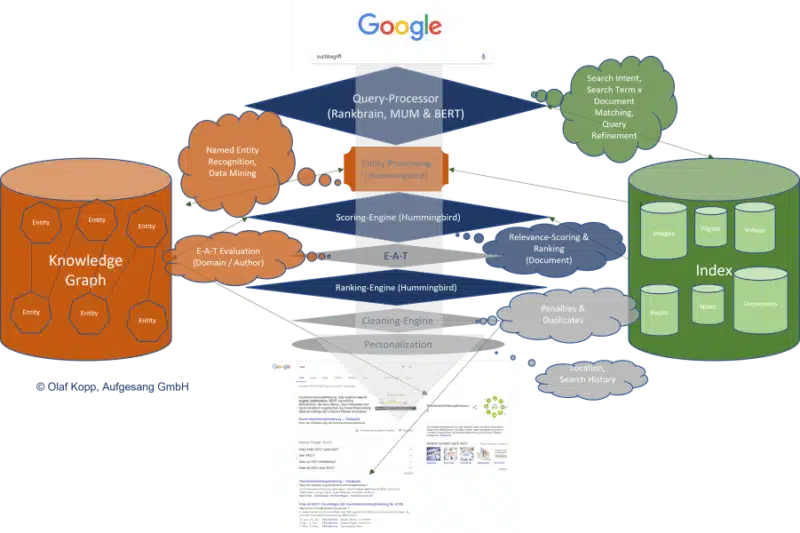
As someone who’s studied linguistics and pragmatics, I’m obsessed with how these systems “think” through meaning. Semantic search embodies what education and AI tools should prioritize, a tight integration between intent, relevance, and usability. And for businesses? This mechanism underpins how your customers discover and trust you.
7 Strategies to Optimize for Semantic Search (and Outrank Rivals)
- Create topic authority: Build pillar content that covers your niche comprehensively and branches into interlinked supporting articles. A bakery? Write about flour types, bread textures, vegan baking alternatives, but link them all cohesively.
- Answer questions directly: Use Q&A formats or bullet points to capture featured snippets, the coveted “zero position” spot on Google. Tools like Ahrefs help you find prime question-based keywords.
- Implement structured data: Schema markup improves machine readability of your site, ensuring AI tools parse your content correctly.
- Local SEO finesse: Optimize entity-based local search by claiming or updating your Google Business Profile and tailoring content with geotargeting keywords (e.g., “best sushi in The Hague”).
- Use natural language: Avoid keyword stuffing. Let “best NYC coffee shop” appear as a question, a casual phrase, or in testimonials.
- Improve internal linking: Build a network of internal links between related content for improved crawlability and semantic signaling.
- Tune multimedia features: Semantic engines prioritize video metadata, audio tags, and alt descriptions. Every YouTube thumbnail, podcast title, or image caption adds to your discoverability.
What’s worked for me at CADChain and Fe/male Switch? Tying every piece of content to a central narrative or “why”. AI, blockchain, or gaming, it makes zero difference without a thread unifying meaning and user intention.
Mistakes to Avoid When Optimizing for Semantic Search
- Ignoring context: Targeting keywords like “smartphones 2026” without answering, “Which? Why? Best for whom?”
- Underusing structured data: Missing structured markup for prices, locations, events, or customer ratings cripples semantic clarity.
- Non-human phrasing: Over-prioritizing algorithms leads to robotic, unreadable text that users will bounce off.
- Content silos: Unconnected articles diminish your topical authority.
- Ignoring small platforms: Bing, YouTube, and TikTok leverage semantic AI, don’t limit optimization to Google alone.
Skip these traps, and you’ll gain an edge in being recognized, for all the right queries.
What Comes Next?
The future is here, whether you’ve prepared for it or not. Founders, remember this: search is no longer an afterthought. From designing AI repartees to embedding semantic signals deep within your business, everything ties back to being discoverable by both humans and intelligent systems. Play the game well, or become invisible.
FAQ on Semantic Search and AI Visibility in 2026
What is semantic search, and how does it differ from traditional search?
Semantic search focuses on the context, user intent, and entity relationships, rather than matching keywords. It ensures search engines understand the "why" behind a query, offering users highly relevant results. Explore how semantic search reshapes SEO strategy in 2026.
How can startups build semantic authority for better visibility?
Startups can build semantic authority by creating linked, topic-focused content and using structured data. This makes it easier for search engines to understand and rank your content. Check out Semantic Authority Leverage for startups.
Why is optimizing for user intent crucial in semantic search?
User intent determines which results align with the purpose of a query. Designing content to answer user questions directly boosts search rankings. Learn actionable steps to match user intent.
How does structured data improve semantic search optimization?
Structured data formats your website information for AI tools and search engines, enabling accurate parsing and results. Tools like Schema markup are key for this optimization. Find detailed insights on GEO and AEO optimization.
What strategies can startups use to dominate local searches in 2026?
Optimizing Google Business Profiles, using geo-targeted keywords, and adding hyperlocal schemas can make startups more visible in local search. Explore top strategies in Local SEO Optimization.
How do knowledge graphs impact semantic search rankings?
Knowledge graphs connect entities, like products or locations, to provide semantic-rich results. Being recognized in these networks enhances visibility for both AI and traditional search engines. Learn how to leverage knowledge graphs with AI SEO.
Why is topical authority vital for startups in the age of AI?
Search engines prioritize comprehensive, interlinked content that fully covers a niche. Generating pillar articles expands topical authority and improves rankings. Discover how to create impactful topic clusters.
What role do AI-driven SEO tools play in semantic search optimization?
AI tools help analyze user behavior, intent data, and content gaps, making it easier to adapt strategies for evolving algorithms. Learn more about AI-powered SEO tips.
How does YouTube benefit from semantic search optimization?
Semantically optimized video titles, captions, and metadata improve AI search discoverability on platforms like YouTube. Check out YouTube SEO tips for startups in 2026.
What common mistakes should startups avoid in semantic search optimization?
Avoid keyword stuffing, unconnected content silos, and neglecting structured data formats. Ensure a focus on the reader’s query context and create content that resonates emotionally. Discover the SEO Checklist to avoid these pitfalls.
About the Author
Violetta Bonenkamp, also known as MeanCEO, is an experienced startup founder with an impressive educational background including an MBA and four other higher education degrees. She has over 20 years of work experience across multiple countries, including 5 years as a solopreneur and serial entrepreneur. Throughout her startup experience she has applied for multiple startup grants at the EU level, in the Netherlands and Malta, and her startups received quite a few of those. She’s been living, studying and working in many countries around the globe and her extensive multicultural experience has influenced her immensely.
Violetta is a true multiple specialist who has built expertise in Linguistics, Education, Business Management, Blockchain, Entrepreneurship, Intellectual Property, Game Design, AI, SEO, Digital Marketing, cyber security and zero code automations. Her extensive educational journey includes a Master of Arts in Linguistics and Education, an Advanced Master in Linguistics from Belgium (2006-2007), an MBA from Blekinge Institute of Technology in Sweden (2006-2008), and an Erasmus Mundus joint program European Master of Higher Education from universities in Norway, Finland, and Portugal (2009).
She is the founder of Fe/male Switch, a startup game that encourages women to enter STEM fields, and also leads CADChain, and multiple other projects like the Directory of 1,000 Startup Cities with a proprietary MeanCEO Index that ranks cities for female entrepreneurs. Violetta created the “gamepreneurship” methodology, which forms the scientific basis of her startup game. She also builds a lot of SEO tools for startups. Her achievements include being named one of the top 100 women in Europe by EU Startups in 2022 and being nominated for Impact Person of the year at the Dutch Blockchain Week. She is an author with Sifted and a speaker at different Universities. Recently she published a book on Startup Idea Validation the right way: from zero to first customers and beyond, launched a Directory of 1,500+ websites for startups to list themselves in order to gain traction and build backlinks and is building MELA AI to help local restaurants in Malta get more visibility online.
For the past several years Violetta has been living between the Netherlands and Malta, while also regularly traveling to different destinations around the globe, usually due to her entrepreneurial activities. This has led her to start writing about different locations and amenities from the point of view of an entrepreneur. Here’s her recent article about the best hotels in Italy to work from.
