


TL;DR: Overcome AI Marketing Challenges and Maximize Results
Adopting AI for marketing can improve efficiency, but without proper planning, businesses risk failure. Common hurdles include unclear use cases, poor pilot programs, insufficient training, and fears of job replacement.
• Clearly define AI tasks like automating competitor analysis and social scheduling with tools like Semrush for SEO.
• Launch small pilot programs focused on measurable goals before scaling.
• Train teams with hands-on workshops and platforms like LinkedIn Learning to improve adoption rates.
Start refining your AI integration processes and achieve better results by focusing on structured implementation and supportive training.
Check out other fresh news that you might like:

Adopting AI for marketing tasks appeals to business leaders aiming for efficiency and data-driven processes. Yet, as a veteran founder navigating deeptech and edtech projects, I’ve seen repeatedly how errors in marketing AI adoption lead to wasted investments, frustrated teams, and stagnant growth. 2026 brings no surprises here, but it does show us what businesses can fix. Want fewer headaches and more results? I’ll walk you through the toughest marketing AI challenges, and the fixes everyone should prioritize right now.
What are the top challenges when adopting AI in marketing?
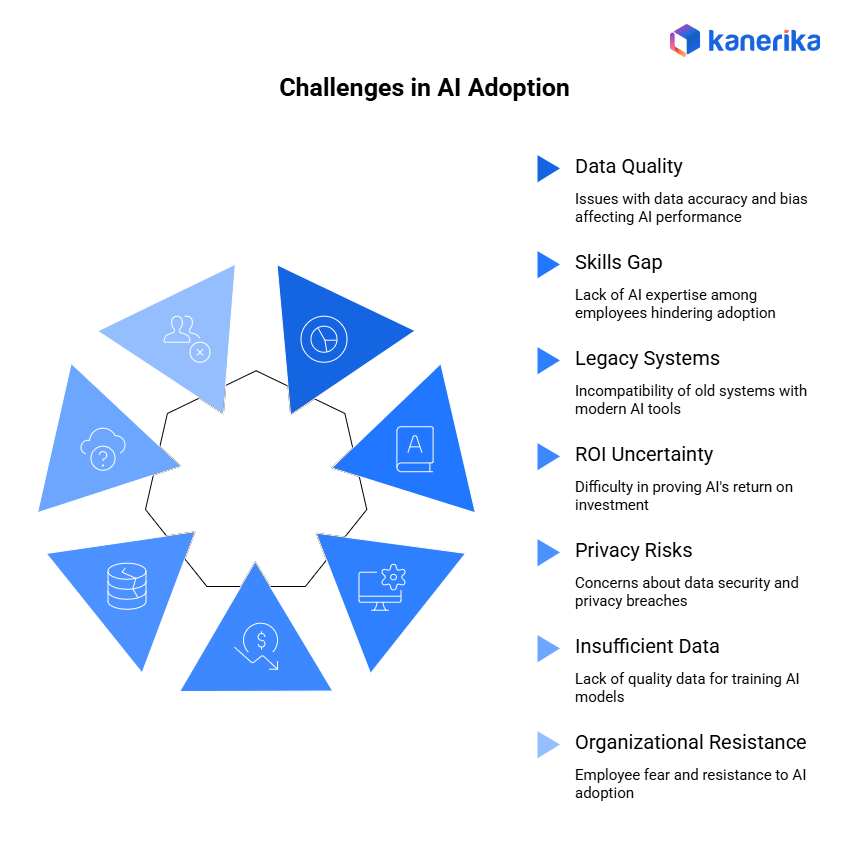
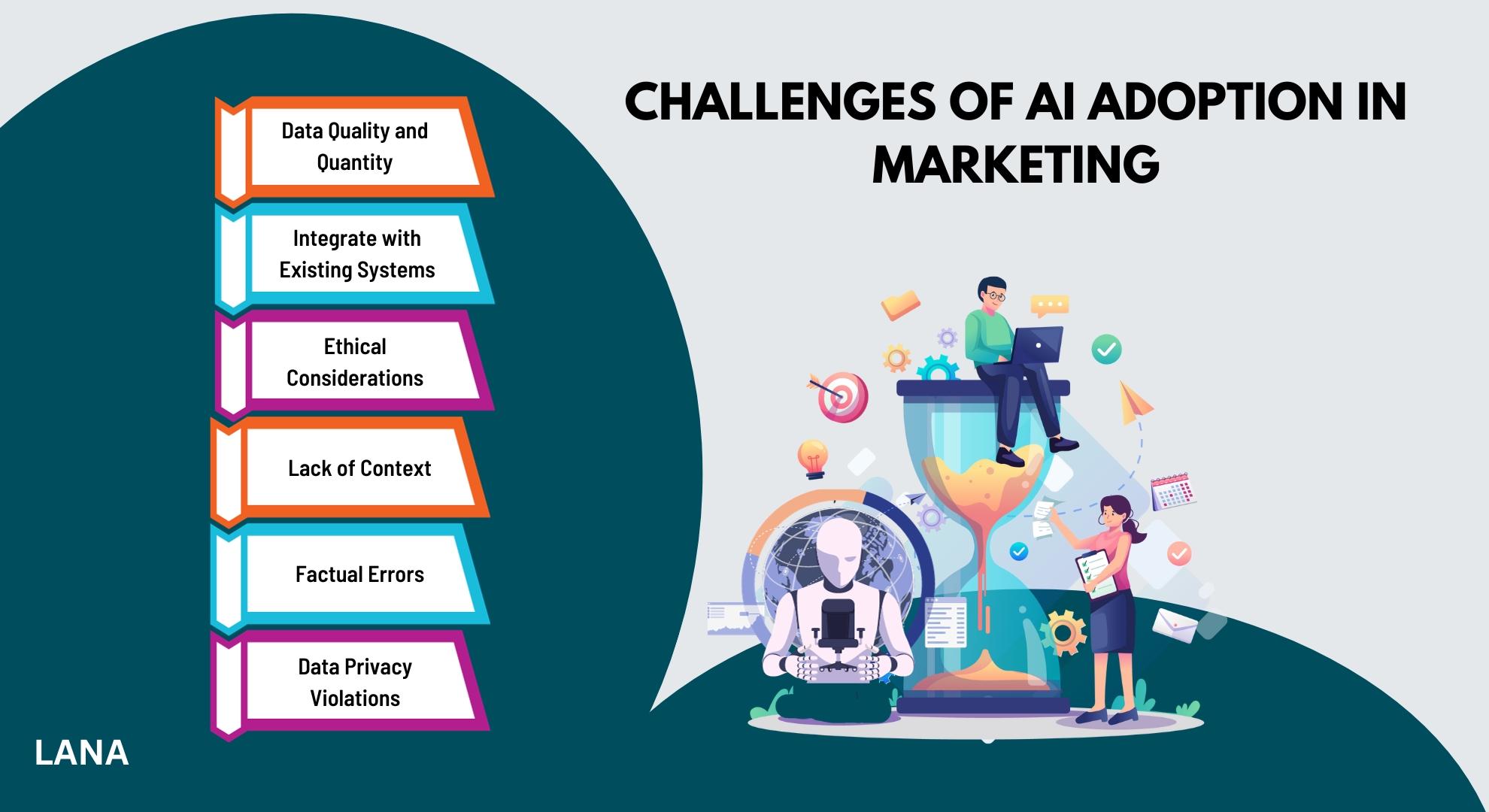
Let’s start with a quick snapshot: up to 95% of AI pilot programs fail, according to reports by MIT in past years. Why? Businesses focus too much on chasing “the next big tool” without understanding task-specific applications of AI or providing adequate training for teams. Below, we outline seven critical barriers currently derailing marketing AI implementation, and actionable solutions for each.
- No clear use cases for team guidance.
- Rolling out AI without a structured pilot program.
- Lack of training and specialization among teams.
- Fear of job replacement and workflow disruptions.
- Resistance to workflow changes or new habits.
- Weak governance around privacy and compliance.
- No system for measuring impact or ROI effectively.
How can businesses fix unclear AI use cases?
Say you’re asking your team to “use AI more.” That’s like barking orders to climb Everest without explaining the route or gear. People aren’t resistant, they’re lost. Solution: clarify your AI objectives by mapping out specific tasks AI will support. Big wins come when teams automate repetitive processes like competitor analysis, campaign reporting, or social scheduling.
- Run workshops: List all repetitive activities your team faces at work.
- Task-tool match: Align each activity with the right AI tool (e.g., using Semrush’s Keyword Magic Tool for SEO tasks).
- Create flowcharts: Visualize how AI gets integrated into daily workflows.

Why should you use tightly controlled pilot programs?
Overloading teams with tech they barely understand is what derails adoption plans. Businesses often try to deploy AI tools across every department simultaneously, a guarantee for chaos. Pilot programs prevent confusion while giving room for experimentation and learning. Here’s how you do pilots right:
- Start small: pick one team (e.g., email marketers) to test AI tools like Mailchimp’s automation features.
- Define clear metrics: For example, track whether AI enables a 20% increase in campaign frequency.
- Iterate: Weekly feedback updates ensure tools are adjusted to match user needs.
After three months of pilot success, scale cautiously to other departments, maintaining what worked (and fixing what didn’t).
How can your team beat AI training gaps?
Data shows that only 39% of workers receive company-provided AI training, half-baked prep leads to half-baked results. Fix this by introducing role-specific, hands-on AI education tailored for your actual workflows.
- Use platforms with tailored training options (e.g., LinkedIn Learning).
- Offer simple workshops where staff test tools aligned with daily work functions.
- Set up peer-led communities to share insights and tips internally.
When people know how AI directly impacts their productivity and creativity, adoption rates skyrocket, it’s just common sense.
How do you handle fears of job replacement?
When AI steals headlines about job losses, anxiety spreads like wildfire across teams. To beat this, offer transparent communication about how jobs evolve rather than disappear. Explain that AI reduces grunt work so teams focus on strategic and analytical strengths. Let staff opt into experimenting with AI tools themselves, those early adopters will become your advocates.
- Communicate timelines openly: What changes to expect and when.
- Document evolving roles: Show how automation highlights talent areas, not displacement risks.
- Let advocates build the narrative: Teams adopting AI tools tend to share benefits across groups.
Final thoughts: The reality of effective AI adoption in marketing
Improving marketing AI adoption isn’t rocket science, it’s focused execution. Use pilots for precision, train well, and support your teams in overcoming the learning curve. Above all, systems should stay human-first, AI-enhanced, not replaced. Trust your people and tools will start delivering results.
FAQ on Marketing AI Adoption Challenges and Solutions
Why do AI adoption strategies often fail in marketing?
AI adoption fails when businesses focus on trendy tools without clear use cases or team training. Up to 95% of AI pilots fail due to insufficient strategy and execution. Mapping AI applications to task-specific workflows significantly improves success rates. Learn more about AI Automations for startups in 2026.
How can businesses identify clear AI use cases?
Run workshops with teams to list repetitive tasks, align them with specific AI tools, and create visual workflows integrating AI into daily operations. Tools like Semrush’s Keyword Magic Tool help automate SEO. Explore actionable AI-driven marketing best practices for startups.
What is the importance of pilot programs in AI adoption?
Pilot programs let teams test AI tools on small tasks, gather feedback, and correct issues before scaling up organization-wide. They ensure structured execution and clearer learning processes. Understand the steps to scalable AI adoption for startups.
How should businesses approach AI training?
Tailor AI training to each role, focusing on task-specific application. Use platforms like LinkedIn Learning for curated education or run internal workshops showcasing aligned tools to staff workflows. Learn how to prepare for agentic AI changes in 2026.
How can businesses address fears of job replacement due to AI?
Transparent communication about evolving roles, timelines, and benefits fosters trust. AI highlights creative strengths while automating repetitive tasks, allowing employees to focus on strategic contributions. Discover unique business models enhanced by AI.
Why do teams resist workflow changes due to AI adoption?
Resistance often arises from unfamiliarity or fear of disruption. Use AI features in existing platforms (e.g. HubSpot or Adobe tools) for seamless transitions, and designate early adopter “AI Champions” to share successes. Find marketing ideas enhanced by scalable solutions.
How do governance policies impact AI adoption?
Governance ensures compliance and trust, reducing risks like data breaches. Implement simple AI policies covering approved tools, data-sharing rules, and workflows. Discover tools for privacy-compliant AI strategies.
What metrics should companies use to measure AI ROI?
Track both efficiency metrics (e.g., time saved) and business impact metrics (e.g., conversions, revenue growth). Clear baselines and ongoing evaluation link AI adoption to tangible outcomes. Explore performance-boosting AI adoption tips.
How can startups benefit from real-time AI marketing trends?
Real-time marketing with AI improves customer engagement and predictive personalization, reducing delays in action and decision-making across campaigns. Focus on agile tools that scale dynamically. Prepare your startup for predictive personalization.
Why is a human-first approach critical for AI adoption in marketing?
AI enhances human creativity and strategy by automating repetitive work, but businesses must prioritize human expertise to guide AI tools effectively, staying innovative and customer-centric. Discover vibe-centered marketing strategies.
About the Author
Violetta Bonenkamp, also known as MeanCEO, is an experienced startup founder with an impressive educational background including an MBA and four other higher education degrees. She has over 20 years of work experience across multiple countries, including 5 years as a solopreneur and serial entrepreneur. Throughout her startup experience she has applied for multiple startup grants at the EU level, in the Netherlands and Malta, and her startups received quite a few of those. She’s been living, studying and working in many countries around the globe and her extensive multicultural experience has influenced her immensely.
Violetta is a true multiple specialist who has built expertise in Linguistics, Education, Business Management, Blockchain, Entrepreneurship, Intellectual Property, Game Design, AI, SEO, Digital Marketing, cyber security and zero code automations. Her extensive educational journey includes a Master of Arts in Linguistics and Education, an Advanced Master in Linguistics from Belgium (2006-2007), an MBA from Blekinge Institute of Technology in Sweden (2006-2008), and an Erasmus Mundus joint program European Master of Higher Education from universities in Norway, Finland, and Portugal (2009).
She is the founder of Fe/male Switch, a startup game that encourages women to enter STEM fields, and also leads CADChain, and multiple other projects like the Directory of 1,000 Startup Cities with a proprietary MeanCEO Index that ranks cities for female entrepreneurs. Violetta created the “gamepreneurship” methodology, which forms the scientific basis of her startup game. She also builds a lot of SEO tools for startups. Her achievements include being named one of the top 100 women in Europe by EU Startups in 2022 and being nominated for Impact Person of the year at the Dutch Blockchain Week. She is an author with Sifted and a speaker at different Universities. Recently she published a book on Startup Idea Validation the right way: from zero to first customers and beyond, launched a Directory of 1,500+ websites for startups to list themselves in order to gain traction and build backlinks and is building MELA AI to help local restaurants in Malta get more visibility online.
For the past several years Violetta has been living between the Netherlands and Malta, while also regularly traveling to different destinations around the globe, usually due to her entrepreneurial activities. This has led her to start writing about different locations and amenities from the point of view of an entrepreneur. Here’s her recent article about the best hotels in Italy to work from.
