


TL;DR: Cheetah Valuations – Taxatie in Eindhoven gives you clear, local help for residential property valuations, mortgage reports, and English-language guidance in Eindhoven.
• Cheetah Valuations – Taxatie in Eindhoven is built to help you get a residential taxatie or taxatierapport without getting lost in Dutch property terms, lender requests, or deadline stress. It focuses on real user needs like NWWI validation, refinancing, renovation loans, and mortgage timing.
• The site stands out because it is tightly focused on Eindhoven, with clear routes for buyers, homeowners, expats, and property owners. You get plain-language answers, document prep help, and English explanations of Dutch valuation terms before you contact the appraiser.
• Trust is a big part of the offer: the project is tied to a named certified appraiser, Dirk-Jan Bonenkamp, with NRVT and NWWI credentials. That gives you a clearer path from confusion to action than a generic lead-gen page.
• For founders and business owners, the article shows why a small local service site can win: clear search intent, sharp positioning, strong trust pages, and useful FAQ content often beat bigger, noisier brands.
If you want a faster, clearer route to a residential valuation in Eindhoven, visit Cheetah Valuations and find the path that fits your situation.
NB. If you prefer the Dutch version, check out this website to find a taxateur in Eindhoven.
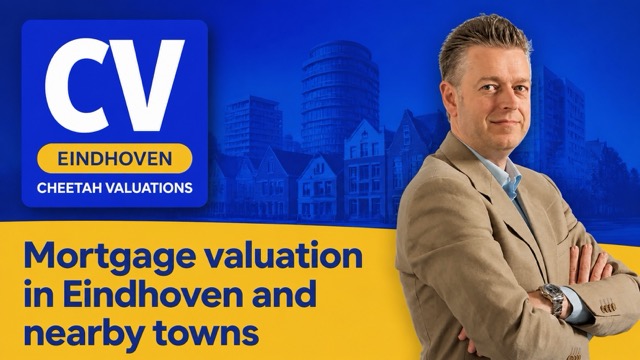
Cheetah Valuations – Taxatie in Eindhoven is the kind of project I love building because it solves a boring, expensive, high-friction problem with clear language, local intent, and focused SEO. I am Violetta Bonenkamp, and I look at projects like this through the lens of a bootstrapping founder who would always rather build a sharp, useful niche business than burn cash on hype. In Eindhoven, people do not want vague property content. They want answers about taxatie, taxatierapport, NWWI validation, mortgage timing, required documents, and whether they can get the whole process explained in English. That is exactly why this project has teeth.
What makes this press release worth your attention is simple. This is not a generic local lead-gen page dressed up as a business. It is a tightly positioned service website built around a real local need, a real expert, and a real language gap in the Dutch housing market. The project behind Taxatie Eindhoven residential valuation guidance is designed to help homeowners, buyers, sellers, refinancers, renovation borrowers, and expats understand what they need before they request a valuation. That matters because property valuation mistakes cost time, money, and sometimes a mortgage deadline.
Why did I back this local service project?
I like startup ideas that sit close to money, urgency, and search intent. Taxatie in Eindhoven does all three. People search when they have already bought a home, when their lender has asked for a report, when they want to refinance, or when renovation financing depends on a new valuation. This means the user is rarely browsing for entertainment. The user is trying to get a task done, often under pressure. That is GOOD business territory.
As a founder, I have built across deeptech, edtech, AI tooling, and no-code systems. One lesson repeats every time: if you can reduce confusion in a regulated or semi-regulated process, you can build trust fast. The Dutch property valuation process has enough moving parts to confuse even smart people. Terms like NRVT, NWWI, WOZ value, mortgage valuation, validated report, apartment documents, and lender conditions are not self-explanatory, especially for expats. So I saw an opening to build a service site that acts like a translator between people, banks, and appraisers.
And yes, I prefer this sort of business over the usual startup theatre. No giant funding round. No fake scarcity. No consultant circus. Just a focused website, a trusted appraiser, strong local SEO, and content that helps people make a decision. That is how small businesses win. BOOTSTRAP FIRST, and keep the machine lean.
What problem does Cheetah Valuations solve in Eindhoven?
The project solves a very concrete local problem: many people in Eindhoven need a residential valuation report, but they do not fully understand the Dutch process or what their lender is asking for. A taxatie is a property valuation for a defined purpose and date. A taxatierapport is the formal valuation report. When a lender asks for an NWWI report, they often mean a validated residential report that fits mortgage underwriting requirements. People who do not work in Dutch real estate every day often mix these up.
That confusion gets worse in time-sensitive situations. A buyer may have signed a purchase agreement and now needs a valuation before the financing deadline. A homeowner may want to redo a mortgage and borrow against current value. Someone planning renovation financing may need the value before and after improvements, depending on lender rules and supporting documents. An expat may understand finance perfectly well but still struggle with Dutch terms in lender emails. The project is built to answer these questions before the intake call.
- Buyers who bought a home in Eindhoven and need a mortgage valuation.
- Homeowners who want to refinance or change mortgage conditions.
- Renovation borrowers who need valuation context tied to plans and quotes.
- Expats who need the process explained in English.
- Investors and local property owners who need clear residential valuation guidance.
Notice what the project does not try to be. It does not promise mortgage approval. It does not pretend to cover every kind of valuation under the sun. It is focused on residential valuation situations in and around Eindhoven. I respect that. Sharp positioning beats bloated service menus every single time.
Why is Eindhoven the right local market for this service?
Eindhoven is one of those Dutch cities where international mobility, tech jobs, housing pressure, and home finance decisions collide. You have Dutch buyers, dual-language households, knowledge workers, expats, and professionals moving for work. That creates a market where people often need not just a report, but also interpretation. They need someone to explain what the lender means, what documents matter, and what happens next.
From a search perspective, local service intent in Dutch is powerful. People type phrases like taxatie Eindhoven, woningtaxatie Eindhoven, taxatierapport Eindhoven, and similar variants because they are trying to solve a location-bound task. This gives the site a very strong semantic structure. The entities are clear: Eindhoven, residential valuation, mortgage, NWWI, NRVT taxateur, lender request, documents, deadline, and English-language help. Search engines like clarity. Users like it even more.
Here is the founder angle that many people miss. A local service site like this can outperform flashy national brands if the content is tighter, the trust signals are cleaner, and the route to conversion is shorter. You do not need ten thousand pages. You need the RIGHT pages, mapped to the right user moments. That is startup discipline, not content bloat.
What makes the project structure smart from a business point of view?
Let’s break it down. The project is not just a homepage with a phone number. It has a service router, an about page, an FAQ hub, clear intake logic, and route-based entry points for different mortgage situations. That matters because most service websites dump everyone into one generic inquiry form. This one sorts intent first.
- Buyer route for people who just bought a property and need a valuation for mortgage processing.
- Homeowner route for people who want to refinance, change mortgage terms, or borrow for renovation.
- Dutch terms explained in English so users can decode lender and advisor messages.
- Intake preparation content so the request starts with the right documents and deadline context.
- FAQ depth that captures long-tail search and pre-empts objections.
This is exactly how I think about practical digital businesses. You build a system that reduces waste on both sides. The customer arrives better informed. The appraiser gets a better intake. The website does a lot of the repetitive explanation work. That is what I mean when I say AI and no-code are the best co-founders for small teams. Not because they replace judgment, but because they absorb repetitive educational work that would otherwise eat time.
Why does the English-language angle matter so much?
Because English support is not cosmetic in Dutch property services. It is commercial. Eindhoven has a strong international base, and many expats are comfortable making large financial decisions in English even when they live in the Netherlands. A Dutch mortgage valuation process explained badly creates hesitation. A Dutch mortgage valuation process explained clearly in English creates trust.
I come from a linguistics background as much as a startup one, so I care deeply about language as infrastructure. Bad copy causes bad decisions. Good copy removes friction. A phrase like Taxatie Eindhoven: Mortgage Valuation in English does more than rank. It tells a stressed buyer, within seconds, that this site understands both the service and the language barrier. That is not branding fluff. That is conversion logic.
Who is behind the valuation trust layer?
A local service project lives or dies on trust. In this case, the trust layer is not abstract. The project is tied to Dirk-Jan Bonenkamp, presented as a certified appraiser, NRVT taxateur, NWWI taxateur, and licensed valuer for residential property valuations and taxatierapport requests in Eindhoven. That is exactly the kind of clear person-page trust architecture I want to see in service SEO.
When I build or support projects, I push hard against faceless websites. People are handing over financial details, property documents, and timeline pressure. They need to know who stands behind the report process. A strong local Eindhoven taxatie service website should not hide the expert. It should put that expert in context, explain credentials in plain language, and connect those credentials to the user’s decision.
That is also why the site’s trust pages matter. The services page routes users by situation. The about page connects the service to a named professional. The FAQ page gives breadth and reassurance. This is how you build a small authority site without pretending to be a giant portal.
How does the site turn SEO into actual commercial intent?
Too many founders talk about SEO as if it were a vanity traffic game. I do not. I treat SEO as market structure. If someone searches for taxatie in Eindhoven, that person often wants one of five things: a definition, a requirement, a timeline, a document checklist, or a service request. The project matches those needs directly.
The homepage handles high-intent orientation. It defines taxatie Eindhoven, explains mortgage valuation use, and gives people a route. The services page captures mid-funnel service matching. The FAQ page absorbs informational search demand and objection handling. The local trust angle supports conversion. Put bluntly, this is how you build an SEO machine that is small, local, and commercially sane.
- High-intent keyword cluster: taxatie Eindhoven, woningtaxatie Eindhoven, taxatierapport Eindhoven.
- Meaning cluster: mortgage valuation, residential valuation, NWWI report, lender requirement, appraisal timing.
- Trust cluster: NRVT taxateur, NWWI taxateur, certified appraiser, Eindhoven local service.
- Objection cluster: cost, timing, translation, documents, report type, NHG-related questions, apartment paperwork.
- Audience cluster: buyers, homeowners, expats, renovators, investors.
This kind of semantic structure matters more now because search is shifting. People still use Google, but they also ask AI systems. AI systems favor clear entity relationships and direct answers. If your site explains what a taxatie is, who needs it, when it is needed, what documents are required, what NWWI means, and what local Eindhoven context looks like, you have a better shot at being cited, summarized, or surfaced.
What should entrepreneurs learn from this project?
A lot, actually. This is one of those projects that looks modest from the outside and teaches brutal startup truth on the inside. The truth is that most founders chase crowded categories because they want social proof. I prefer categories where intent is clear, money is close, and confusion is expensive. That is why I respect this build.
- Pick a narrow use case before you pick a giant market.
- Map user stress points, not just keywords.
- Use language as product design, especially in regulated or bilingual contexts.
- Build trust with named humans, not empty slogans.
- Design routes for different customer moments instead of one generic funnel.
- Start with no-code and content systems before paying for custom tech.
- Keep the service boundary clear so wrong-fit leads do not clog your pipeline.
This is close to how I build my own ventures. I have spent years working across deeptech, education, AI workflows, startup systems, and game-based founder training. The pattern is consistent. People do not need more noise. They need structure. They need the next step explained. They need a clean path from confusion to action. A focused local website can do that beautifully if you respect the user’s actual job to be done.
Why do I think bootstrapping fits this project so well?
Because this business does not need venture capital theatre. It needs disciplined execution. A local domain, service pages, FAQ architecture, intake routes, strong copy, local trust signals, and measured content expansion can go very far without external money. I have said it for years: bootstraping beats VC funding any day when the business can reach revenue from focused demand. This is one of those cases.
A founder can build the first version of this sort of site with no-code tools, AI-assisted drafting, local SEO research, and direct user interviews. You do not need an army. You need clarity. People massively overestimate the amount of code needed for service businesses and massively underestimate the power of useful content paired with a strong intake process. ZERO-CODE WINS AGAIN.
What questions does the project answer for users before they contact the appraiser?
This is where the website gets practical. A good local service site should remove the repetitive questions that clog the first call. The Cheetah Valuations project is set up to answer questions such as:
- What is a taxatie in the Dutch mortgage context?
- What is a taxatierapport and when does a lender ask for it?
- What is NWWI and does the lender require an NWWI-validated report?
- What documents should a buyer prepare before requesting a valuation?
- What should a homeowner prepare for refinancing or renovation borrowing?
- How does timing work when financing deadlines are close?
- What Dutch terms appear in lender emails, and what do they mean in English?
- Does the service focus on residential property in and around Eindhoven?
That pre-contact education is not just helpful for users. It protects the service business from low-quality leads and mismatched expectations. One of my operating beliefs is that people do not need more inspiration. They need infrastructure. In a project like this, infrastructure means explanations, intake structure, terminology translation, and expectation setting.
Why does the FAQ strategy matter more than most founders think?
The FAQ page is planned as a broad answer hub with 120 answers around taxatie Eindhoven, taxatierapport Eindhoven, NWWI reports, NRVT, NHG, costs, timing, English translation, WOZ value, and residential valuation issues. That is smart because service buyers ask fragmented questions. They do not always search in clean, high-volume head terms. They search in messy, anxious fragments.
A strong FAQ hub does three jobs at once. It captures long-tail search. It calms anxious visitors. And it gives AI systems a dense answer set to work with. If each answer is clean, local, and specific, the site becomes more than a brochure. It becomes a reference layer.
I have a slightly provocative take here. Most startup founders ignore FAQ pages because they want to build shiny product features. That is rookie thinking. In many service businesses, the FAQ is part of the product. It shortens the sales cycle, reduces support burden, and improves lead quality. If you are building in a trust-heavy category, your FAQ may make more money than your homepage hero section.
What are the strongest conversion assets in this project?
Next steps. Let’s look at the conversion assets that actually matter.
- Clear headline intent: taxatie in Eindhoven and mortgage valuation in English.
- Situation-based routing: buyer route and homeowner route.
- Document prompts: property address, purchase agreement, lender request, renovation plans, deadline.
- Term translation: Dutch valuation words explained for English-speaking users.
- Named expert trust layer: certified appraiser identity attached to the service.
- Focused CTA: start the route that matches the user situation.
This is very close to how I think startup funnels should work. You do not push everyone through the same tunnel. You classify intent, reduce ambiguity, ask for the minimum useful information, and move the user forward. Small service businesses often fail because they copy big brand websites that are built for committee approval, not actual human action.
What should founders avoid when building niche local service sites like this?
I have seen the same mistakes too many times. If you are building a local professional service brand, avoid these traps:
- Generic city pages with near-duplicate copy and no actual local relevance.
- Overclaiming by implying guaranteed mortgage approval or outcomes you do not control.
- Weak trust pages that hide the actual human expert behind vague company language.
- Jargon overload that confuses users instead of helping them prepare.
- One-size-fits-all forms that ignore user context and waste everyone’s time.
- Broad service sprawl into unrelated property categories just to look bigger.
- Thin FAQ content that answers nothing and exists only to fill space.
My advice is blunt. Build the site users wish existed when they are under deadline pressure. That usually means less marketing fluff, fewer stock phrases, and more grounded answers. People respect businesses that speak plainly, especially when money and paperwork are involved.
How does this project fit my wider founder philosophy?
Very closely. I believe women need more startup infrastructure, not more empty motivation content. I believe bootstrapping teaches discipline faster than investor theatre. I believe AI is the best co-founder most founders never fully use. I believe no-code can get an early service business surprisingly far. And I believe founders should learn by building, not by collecting certificates and waiting for permission.
That is why this project appeals to me. It is grounded. It respects local intent. It turns language into a business asset. It uses structured content as a trust engine. It can be built lean, refined fast, and expanded based on actual search demand. If you ask me, more founders should build things like this instead of pitching fragile ideas that need giant budgets before they even face a real customer.
I have built ventures in deeptech, AI, game-based education, and startup systems. Across all of them, one lesson stands out: people reward businesses that remove friction from stressful decisions. Cheetah Valuations does exactly that for residential property valuation in Eindhoven. It gives users language, process, trust, and route clarity. That is why I think the project has strong commercial logic.
What happens next for a project like this?
The smartest next move is disciplined expansion, not random content churn. Start with the highest-intent pages. Refine copy based on actual intake calls. Watch what users ask. Add local and situational pages that map to real demand. Keep the site tightly tied to residential valuation needs in and around Eindhoven. Build authority through clarity, not size.
If I were guiding the growth plan hands-on, I would keep pushing on three fronts: stronger informational clusters around NWWI and mortgage valuation timing, deeper expat-facing English content around Dutch lender terms, and richer document-prep content that helps users show up ready. I would also keep the conversion path short. People dealing with taxatie do not want a content maze. They want the right route and a fast answer.
That is the real story here. Cheetah Valuations is not trying to be everything. It is trying to be USEFUL, trusted, local, and clear. And from my point of view as a female European founder who has spent years building lean systems across hard categories, that is exactly the kind of business logic I want to see more of.
My final take: founders should pay close attention to projects like this. A focused local service site with strong semantics, real trust signals, bilingual clarity, and disciplined routing can outperform louder businesses with ten times the noise. If you want proof that useful content plus sharp positioning still wins, TaxatieEindhoven.com for taxatie and taxatierapport guidance in Eindhoven is a project worth watching.
People Also Ask:
What is Cheetah Valuations – Taxatie in Eindhoven?
Cheetah Valuations – Taxatie in Eindhoven appears to be a residential property valuation service in Eindhoven. It focuses on preparing taxatierapporten, or valuation reports, often used for mortgage applications, refinancing, purchase decisions, divorce settlements, inheritance matters, or sale planning.
What does “taxatie” mean in Eindhoven real estate?
“Taxatie” means a property valuation. In the Dutch housing market, it is an assessment of a home’s market value for a specific purpose, such as getting a mortgage, refinancing a loan, dividing assets, or supporting a purchase or sale.
What is a taxatierapport?
A taxatierapport is an official property valuation report. It usually includes the home’s estimated market value, property details, condition, location, comparable sales, and the purpose of the valuation. Lenders often ask for this report before approving a mortgage.
Why would someone need a property valuation in Eindhoven?
A property valuation in Eindhoven is often needed for a mortgage application, refinancing, buying a home, selling a home, divorce proceedings, inheritance cases, or financial planning. It gives an independent estimate of what the property is worth at the time of the assessment.
Is Cheetah Valuations focused on residential properties?
Yes, the search results suggest that Cheetah Valuations focuses on residential property valuations. The website content points to home appraisal services in Eindhoven rather than commercial real estate or tax advisory work.
Is a valuation the same as a real estate agent’s price estimate?
No, a valuation is not the same as a real estate agent’s price estimate. A formal valuation is a documented report prepared for a stated purpose, often accepted by lenders. A price estimate from an agent is usually more informal and meant to guide a sale strategy.
Can a valuation in Eindhoven be done in English?
Yes, the search results indicate that mortgage valuations in Eindhoven can be provided in English. This can be helpful for expats and international buyers who need a clear report and communication during the mortgage or purchase process.
What does a mortgage valuation in the Netherlands involve?
A mortgage valuation in the Netherlands usually involves inspecting the property, reviewing its size, condition, location, and recent comparable sales, then preparing a formal report with the estimated market value. Banks use this report when reviewing mortgage requests.
Who uses a taxatierapport in the Netherlands?
A taxatierapport is commonly used by banks, mortgage lenders, homebuyers, homeowners, legal advisers, and people handling divorce or inheritance matters. It serves as formal proof of a property’s estimated value.
Is Cheetah Valuations a tax advisory firm?
No, it appears to be a property valuation service, not a tax advisory firm. In this case, “taxatie” refers to real estate appraisal, not tax advice. The search results separate it from firms that deal with Dutch or international tax planning.
FAQ on Taxatie in Eindhoven, Taxatierapport, and Residential Valuation Support
How long is a taxatierapport in Eindhoven usually valid for a mortgage application?
A taxatierapport for mortgage purposes is often accepted for a limited period set by the lender, commonly a few months from the valuation date. Always confirm this with your mortgage advisor first. If your financing timeline slips, ask early whether a new Eindhoven woningtaxatie is required.
What is the difference between a WOZ value and a residential valuation report?
The WOZ value is a municipal tax assessment, while a residential valuation report reflects market value for a specific purpose and date. Lenders usually rely on a taxatierapport, not the WOZ. If you need taxatie Eindhoven for financing, never assume both values are interchangeable.
Can I request a valuation before I have all my documents ready?
Yes, but the process moves faster when key documents are available from the start. Useful items include the property address, purchase agreement, renovation plans, VvE papers for apartments, and lender request details. For a smooth taxatierapport Eindhoven intake, prepare your deadline and mortgage purpose first.
What apartment-specific documents may be needed for a woningtaxatie in Eindhoven?
For an apartment valuation, extra documents may include the VvE contribution overview, reserve fund information, meeting minutes, multi-year maintenance plan, and deed details. Missing apartment paperwork can delay the report. Ask upfront which VvE documents your Eindhoven taxatie request should include.
Does an NWWI taxatierapport always mean the valuation will take longer?
Not always, but NWWI validation can add an extra review step depending on the case and document quality. Timing improves when the lender requirement is clear from day one. If you need an NWWI taxatierapport in Eindhoven quickly, submit complete information and mention your deadline immediately.
What happens if the valuation comes in lower than the purchase price?
A lower valuation may affect how much the lender is willing to finance, which can create a funding gap. That does not automatically kill the purchase, but it changes the numbers. Speak with your mortgage advisor fast and review your contract terms, deposit, and financing options.
Is an English-language mortgage valuation explanation useful even if the report is in Dutch?
Yes. Many expats and international buyers understand the process better when the steps, lender terms, and required documents are explained in English first. That reduces mistakes and delays. For taxatie in Eindhoven for expats, clear English intake support is often as valuable as the report itself.
Should I ask for a valuation before starting renovation plans or after getting quotes?
Start once your renovation scope is concrete enough to document properly. Lenders may want plans, cost estimates, and context if future value matters. Vague ideas are less useful than written quotes. For refinance and renovation taxatie Eindhoven cases, documented plans usually lead to a cleaner process.
Are desktop or remote valuations enough for a Dutch mortgage lender?
Sometimes lenders allow alternative valuation methods, but many mortgage situations still require a full residential valuation report. Acceptance depends on the lender, property type, and financing scenario. Before choosing anything faster, confirm whether your bank specifically requires a standard or NWWI taxatierapport in Eindhoven.
What should I check before contacting a local taxateur in Eindhoven?
Check the purpose of the report, lender conditions, property type, deadline, and whether English explanation is needed. Also confirm if the case is residential only. A good first message includes address, mortgage reason, timing, and available documents. That makes the taxatie Eindhoven request easier to assess quickly.

