


TL;DR: Lessons from the Live Nation-Ticketmaster Antitrust Trial for Entrepreneurs
The Live Nation-Ticketmaster antitrust trial highlights crucial challenges caused by monopolies. Entrepreneurs can benefit by examining how vertical integration influences market behavior and competition.
• Key insight: Diversify resources and revenue channels to reduce dependency on centralized systems.
• Big risk: Relying on dominant players in your industry could curb competition and innovation.
• Pro tip: Build user-friendly processes and a transparent ecosystem to stay ahead in competitive environments.
Stay updated on industry trends and regulatory dynamics that could reshape market opportunities (check out these free alternatives to Briefly Executive Summaries for streamlined business insights: Top Free Summary Tools in 2025). Leverage the power of customer-first systems to mend monopoly-created inefficiencies.
Check out other fresh news that you might like:
What Are Display Ads & How Do They Work?

The Antitrust Trial Against Live Nation-Ticketmaster: What Every Entrepreneur Can Learn
As the curtains rise on the Live Nation-Ticketmaster antitrust trial in 2026, history is being made. This trial is not just a legal showdown aimed at dismantling the monopoly of a giant; it’s an opportunity for entrepreneurs to analyze power dynamics in highly centralized markets. Whether you’re a founder of a bootstrapped SaaS company or gearing up to scale your hardware startup, the lessons here extend well beyond the entertainment industry.
What is this trial really about?
Live Nation, which merged with Ticketmaster in 2010, controls around 80%-86% of the primary ticketing market and manages over 400 artists globally. The Department of Justice (DOJ) alleges this dominance eliminates competition, stifles innovation, and inflates costs for consumers. But here’s where it gets fascinating: the trial isn’t just about market share, it’s about systems. The DOJ argues that vertical integration (where Live Nation controls ticketing, venues, promotion, and artist management) locks artists, venues, and competitors into a monopolistic ecosystem. It’s a case study in how unchecked centralization disrupts fair market practices.
How does this impact entrepreneurs?
As a founder, you may not be running a multibillion-dollar company, but the principles at play here, competition, diversification, and structural dependency, are relevant. Whether you’re building a small SaaS tool or a hardware product, ask yourself: Are competitors locked out by design in your industry? Are key resources concentrated in the hands of just a few major players? The Live Nation case reminds us that monopolies don’t just happen at enterprise scale; they often start small in niches.
- Lesson 1: Never rely fully on one vendor or partner to power your business ecosystem.
- Lesson 2: Diversify revenue channels and stakeholders to avoid systemic risk.
- Lesson 3: Build compliance and fair practices into your processes early, it’s easier than going back later.
What are the immediate accusations?
The DOJ claims Live Nation uses restrictive agreements to force venues into exclusive contracts with Ticketmaster, secures lucrative revenue splits, and shuts independent sellers out of the equation. The company’s control over ticket pricing, resale activity, and venue partnerships creates a flywheel monopoly. For comparison, such systemic dominance in any startup ecosystem would signal high barriers to entry and unsustainable growth constraints for smaller players.
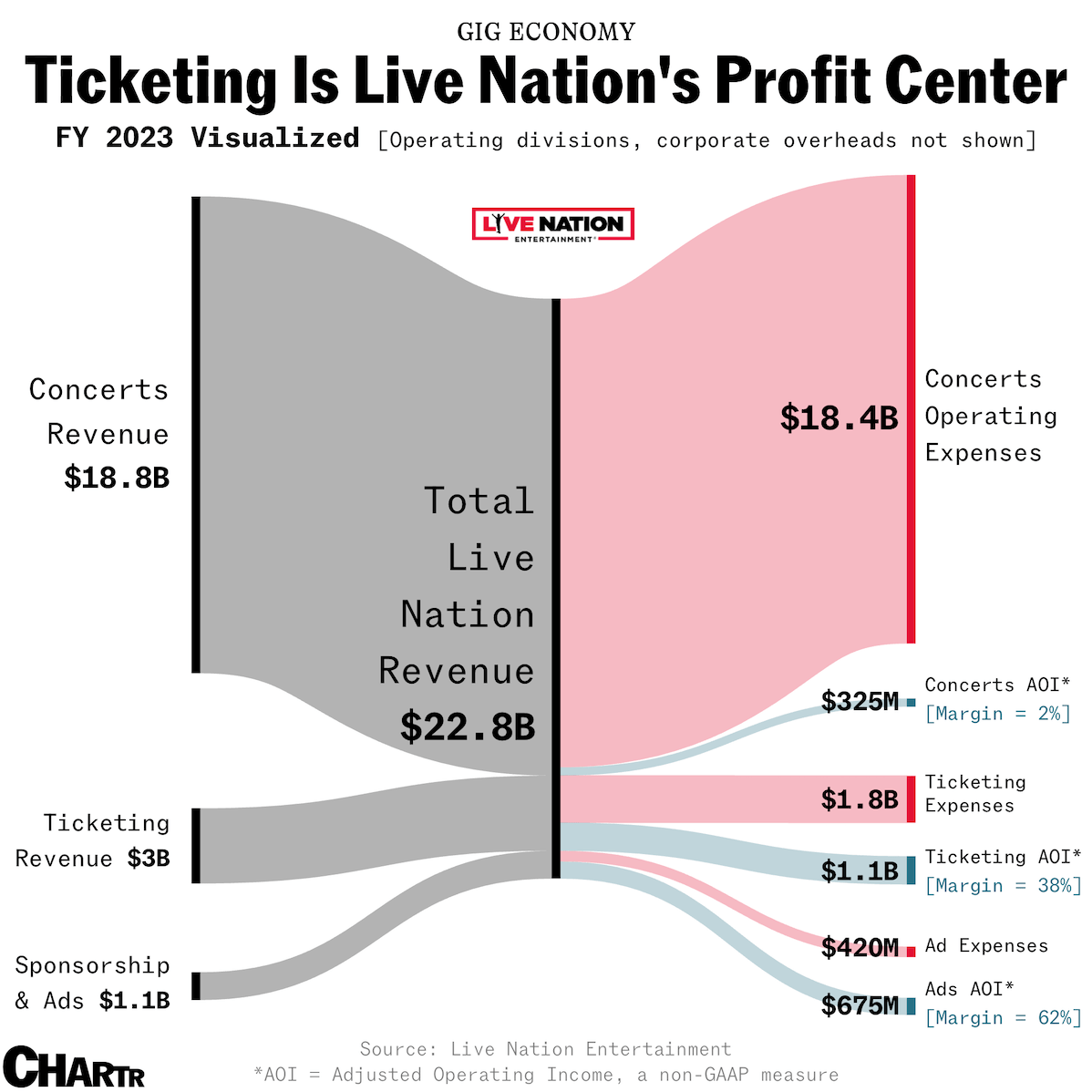
How vertical integration reshapes industries
Vertical integration offers immense power to companies who can execute it effectively. However, as seen in Live Nation’s case, it can also create systemic fragility. In my work with CADChain, I’ve adapted verticality in a different way: embedding IP protection within CAD workflows ensures engineers feel supported, not overpowered. The key difference? Verticality must be designed to help users, not lock them in.
- Consider how Apple dominates with its app ecosystem but still balances value for app developers.
- Reflect on how Amazon leverages logistics and e-commerce to outpace smaller businesses, often to their detriment.
- Compare that with decentralized strategies like Kubernetes, where value is derived from open, customizable approaches.
Why should startup founders monitor this case closely?
The outcome of this trial might set a precedent for how regulatory bodies address not just monopolies but systematic ecosystems dominating their fields. For a SaaS founder competing in cloud infrastructure, for instance, this might be a moment of opportunity as regulators start questioning entrenched players.
- Opportunity: Disruption in monopolistic spaces often allows small, agile startups to compete. Regulators and consumers are both your allies in this case.
- Risk: Founders mimicking monopolistic behavior risk legal scrutiny faster than ever before.
- Takeaway: Build for fairness. Transparency can become a key competitive edge when consumers and regulators are paying attention.
Lessons in customer-first thinking
In 2022, Ticketmaster’s meltdown during the Taylor Swift pre-sale enraged millions of fans and surfaced the reality of monopoly-induced inefficiency. Why does this matter? As I often urge through Fe/male Switch, customer experience is painfully underrated in monopolistic systems. For founders, this is your advantage. If you’re even marginally easier to work with, you’ll win hearts. What Live Nation forgot is that monopoly collapses when people unify in justified frustration against it.
Take cues from this trial to assess if your market faces similar sentiments, and be the startup that fixes those inefficiencies. Build loyalty by tackling the very problems existing giants ignore.
The path forward: adaptability matters
In the chaos of Live Nation-Ticketmaster’s trial, one thing is certain: industries evolve under pressure. This transformation might initially feel like a burden, but for ambitious founders, it’s the ultimate sandbox. Who steps up to fix the cracks exposed by monopolies like these? That’s where the gold is buried. Will you be the one to unearth it?
Stay vigilant, diversify your power bases, and never underestimate what focusing on transparency can do. Just like in game design, where fairness is the backbone of user retention, markets reward systems designed with user-first thinking, a principle that even monopolies must respect sooner or later.
Want insights tailored to niche startups? Join Fe/male Switch’s live sim where founders-in-training compete to solve real business dilemmas. Jump in and design the new rules of play for your industry.
FAQ on the Live Nation-Ticketmaster Antitrust Trial and Insights for Entrepreneurs
Why is the Live Nation-Ticketmaster antitrust trial significant for entrepreneurs?
This trial highlights issues of monopolistic ecosystems, systemic inefficiencies, and market lock-ins. It serves as a reminder for startups to build transparent models, avoid over-reliance on one vendor, and embrace fair competition. Explore lessons for young startups.
What accusations does the DOJ levy against Live Nation?
DOJ claims Live Nation creates restrictive agreements with venues, resulting in inflated prices and limited competition. Vertical integration locks artists and venues in monopolistic systems, a scenario entrepreneurs should avoid replicating. Learn about ecosystem integrity.
How does the entertainment industry reflect broader market consolidation trends?
Live Nation uses its scale to dominate ticketing, promotion, and venue operations, echoing similar practices by tech giants like Amazon and Google. Entrepreneurs should adopt decentralized strategies for growth. Discover open-source startup tools.
What is vertical integration, and how does it impact industries?
While vertical integration boosts efficiencies, it might lead to systemic fragility if misused. Startups should prioritize user empowerment rather than locking stakeholders into dependent ecosystems. Compare best SaaS models.
What can founders learn from monopolistic inefficiencies?
Customer-first strategies are essential. Errors, like Ticketmaster's 2022 Taylor Swift pre-sale meltdown, show that monopolies ignore user experience. Entrepreneurs can win trust by solving these pain points. Boost customer retention insights.
Could this trial affect regulatory scrutiny for smaller markets?
Yes, the outcome may inspire tighter regulations across industries, including tech and SaaS startups. Founders must embed compliant and fair practices early to avoid scrutiny. Master regulatory compliance tips.
How does monopolistic behavior impact niche markets?
Even smaller industries risk falling into monopolistic trends. Focus on diversified revenue streams and partnerships to mitigate risks and foster healthy competition. Innovate smarter in SaaS niches.
How can startups disrupt entrenched ecosystems?
This case shows opportunities for agile startups to fix loopholes ignored by monopolies. Address inefficiencies in dominant systems to stand out and complement regulatory actions. Explore startup disruption strategies.
Why should customer sentiment guide startup development?
Startups that address frustrations in monopolistic systems, offering ease and transparency, can cultivate loyalty. Listening to consumer feedback is a critical growth lever. Learn customer-focused growth techniques.
What does this trial mean for the future of regulatory challenges?
The trial sets a precedent for addressing concentrated market power. Entrepreneurs should focus on innovation anchored in fairness and transparency to win user trust and regulatory approval. Adapt compliance frameworks.
About the Author
Violetta Bonenkamp, also known as MeanCEO, is an experienced startup founder with an impressive educational background including an MBA and four other higher education degrees. She has over 20 years of work experience across multiple countries, including 5 years as a solopreneur and serial entrepreneur. Throughout her startup experience she has applied for multiple startup grants at the EU level, in the Netherlands and Malta, and her startups received quite a few of those. She’s been living, studying and working in many countries around the globe and her extensive multicultural experience has influenced her immensely.
Violetta is a true multiple specialist who has built expertise in Linguistics, Education, Business Management, Blockchain, Entrepreneurship, Intellectual Property, Game Design, AI, SEO, Digital Marketing, cyber security and zero code automations. Her extensive educational journey includes a Master of Arts in Linguistics and Education, an Advanced Master in Linguistics from Belgium (2006-2007), an MBA from Blekinge Institute of Technology in Sweden (2006-2008), and an Erasmus Mundus joint program European Master of Higher Education from universities in Norway, Finland, and Portugal (2009).
She is the founder of Fe/male Switch, a startup game that encourages women to enter STEM fields, and also leads CADChain, and multiple other projects like the Directory of 1,000 Startup Cities with a proprietary MeanCEO Index that ranks cities for female entrepreneurs. Violetta created the “gamepreneurship” methodology, which forms the scientific basis of her startup game. She also builds a lot of SEO tools for startups. Her achievements include being named one of the top 100 women in Europe by EU Startups in 2022 and being nominated for Impact Person of the year at the Dutch Blockchain Week. She is an author with Sifted and a speaker at different Universities. Recently she published a book on Startup Idea Validation the right way: from zero to first customers and beyond, launched a Directory of 1,500+ websites for startups to list themselves in order to gain traction and build backlinks and is building MELA AI to help local restaurants in Malta get more visibility online.
For the past several years Violetta has been living between the Netherlands and Malta, while also regularly traveling to different destinations around the globe, usually due to her entrepreneurial activities. This has led her to start writing about different locations and amenities from the point of view of an entrepreneur. Here’s her recent article about the best hotels in Italy to work from.
